Dove acquistare
Hai bisogno di consigli? I nostri rivenditori altamente preparati saranno felici di aiutarti.
Trova un rivenditore nelle vicinanze
Off-Grid Color Control GX to VRM Portal Connectivity
One for you Ocean Sailors.
If you are planning to visit the London Boat Show at the ExCel Centre, taking place from 9th to 18th January 2015 then MailASail Satellite Communications may be well worth a visit. They will be exhibiting on stand A056 and featuring their new Red Box router as part of an interactive display for the duration of the show.
“Discover how to integrate your onboard communications systems & feed your instruments’ NMEA & AIS data into the Red Box to then share this information over Wi-Fi with the plethora of ‘apps’ that are now available to the modern sailor using a smartphone or tablet onboard.”
Their teleport-it compression technologies helps keep the cost of Sat comms down.
http://www.mailasail.com/Main/Teleport-ItThe router also takes a 3G dongle.
MailASail have the following special offers for the duration of the show:
Red Box – normal RRP £449+VAT, London Boat Show price £299+VAT
WiFi Bat – normal RRP £299+VAT, London Boat Show price £199+VAT
http://www.mailasail.com/Communication/Red-BoxUpdate December 4th 2014In addition to the May update below, please keep an eye on the comments section, for the connectivity experiences of other users. Following on from the recent METS (Marine Equipment Trade Show) a number of updated combined wireless and mobile broadband solutions have come to light. They are more comprehensive and rugged than the traditional home Wi-Fi/3G/4G routers many of us are using. Whilst more expensive they may well suit boat, RV owners or any harsh environment applications. Here are a few suggestions to check out:
http://www.thewirie.com – Pro model released end of 2014http://wavewifi.eu – Comprehensive range of productsUpdate May 12th 2014: the 3G router solution, as explained in this blogpost, works very well. Many of our customers are using it already. Making the VGR2 or any other USB mobile broadband dongle work 100% stable is a lot of work. We have therefore decided to postpone the ‘support USB mobile broadband dongles’ project. This allows us to focus on other things first, for example Wifi dongle support, Remote VEConfigure and improving the overviews.For the grid connected amongst you, with land based broadband who run a CCGX and use the VRM Portal – it is easy to connect the CCGX, so it talks, to the VRM Portal and uploads your data.It’s simply a question of plugging an ethernet cable into a spare port on your broadband router and then into the CCGX. The router will automatically allocate the CCGX a local IP address on your home/business network. Obviously you need to check on your CCGX, that logging is enabled and that an IP address has been allocated. It will likely be in the 192.168.*.* range. Assuming you have set up a VRM account correctly, then the Victron equipment connected to your CCGX will send and log that data via your broadband router to the VRM site.
So what about us off-grid types? As the CCGX runs a fast, lighweight flavour of the Linux operating system, most any USB mobile broadband dongle can be made to work with it. Therein lies the rub as they say. ‘Can’ is the key word herePersonally I wanted to get something up and running now, in my excitement, to get things talking to each other. In that case an equally capable solution (with in fact even more options) is to use an off the shelf 3G/4G router with compatible SIM card or USB mobile broadband dongle.
This solution might not be for all, based on feedback received on the blog. This suggests customers, with installations having small battery systems, may want the lowest possible power use and so prefer to fit a USB mobile broadband dongle, that is recognised by and fits direct into the CCGX. Others in poor reception areas might be looking for a router with a detachable 4G LTE / 3G antenna, that can be replaced with a high gain antenna solution.
Based on this, these matters are being considered by the developers at Victron with the possibility of a Victron branded solution with much faster speeds than those offered by the current Victron GSM/GPRS, Global/Ethernet Remote products. Personally I’d like to see a USB mobile broadband dongle with MiFi solution, that plugs direct into the CCGX.
Having said all that and regardless of speed, off-grid solutions clearly fall into two categories. Those within mobile signal range and those that are not. For those that aren’t – low earth orbit satellite technology such as Thuraya might be a solution or failing that a worldwide geo stationery satellite broadband solution.
Coming back to earth however, most of us will be in mobile signal range and will be one of three types of user.
Here are a couple of examples of off-grid Victron end users.
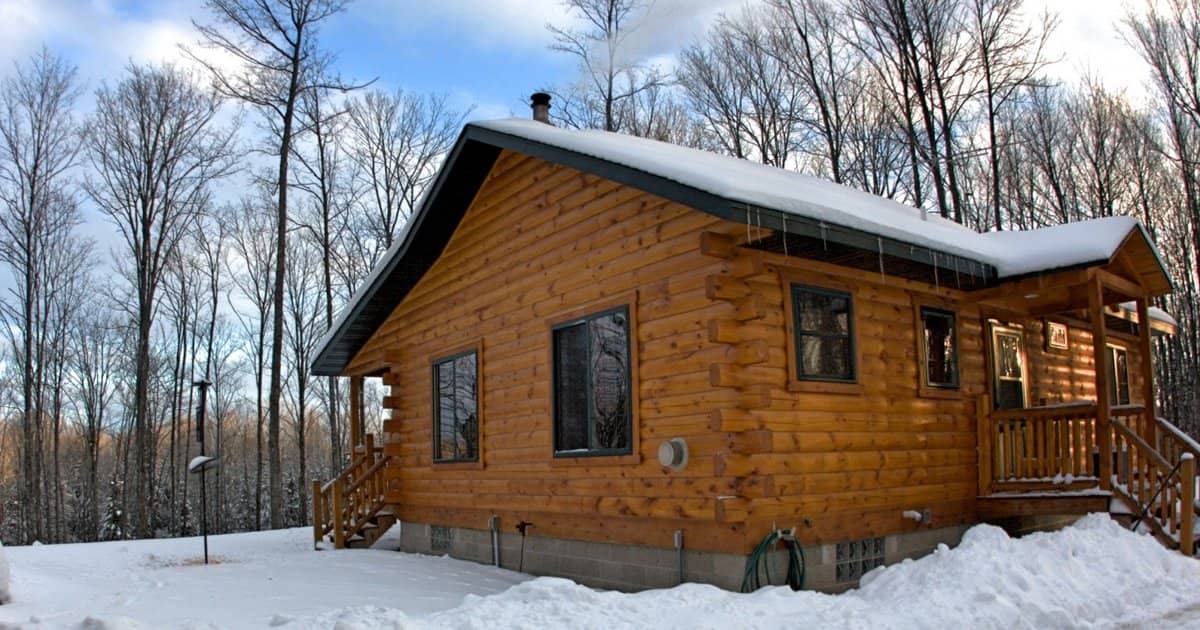
Off-Grid Land – Sam Wiltzius and his off-grid cabin in Michigan.Off-Grid Motorhome/RV – The virtual RV home of TechNomads Chris Dunphy & Cherie Ve Ard.As I sail mostly around the coast, within mobile phone range, here is my setup.
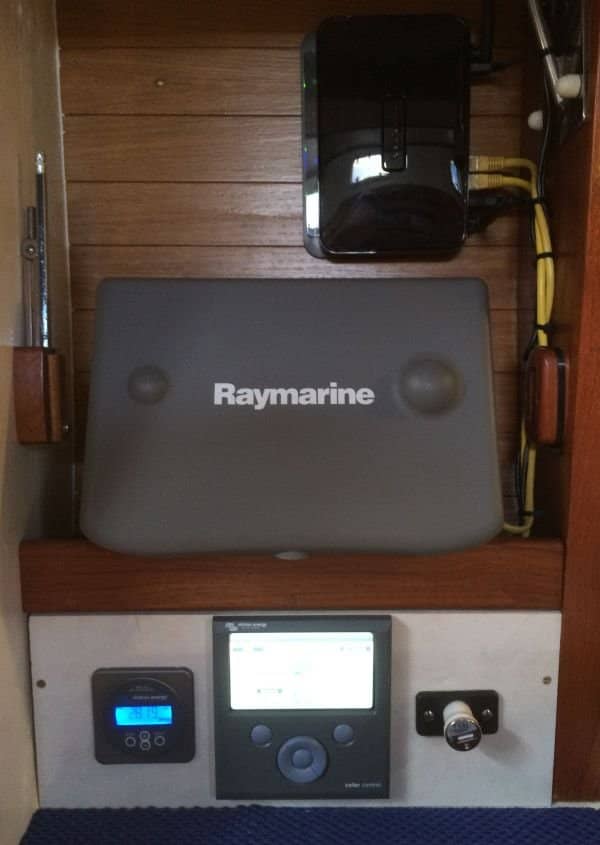
CCGX and Netgear 3G Router
Suitable routers.In my research I came across three makes of router, suitable for my needs. Which one or indeed any similar that you may choose will depend on your location and requirements. As I’m familiar with Netgear and D-Link I looked at them first. Unless you need higher speeds than 3G or 3G+ I’d stick with that in terms of cost.
Personally I chose an end of line MBRN3000 NETGEAR 3G+ Mobile Broadband Wireless-N Router as the USB dongle I had was listed as a compatible modem. Here is a worldwide list of of currently supported 3G+ USB modem products for that router.
Another reason I wanted a Netgear or D-Link is that they generally have built in Dynamic DNS support update clients. This simply means that if you wish to administer the router from a remote location, you don’t need to try and guess the dynamic IP (unlikely) or physically go to the router location to discover it, by logging in locally on site e.g. http://192.168.0.1/
Instead of that you use a fully formed web address, from a remote computer, that stays the same. e.g. http://MyOffGridSolution.dyndns-remote.com and the router automatically updates the dynamic IP on the fly, if it loses a connection and auto reconnects with a different dynamic IP. This Dynamic DNS support solution lets you use a normal URL, with a domain name as indicated, from anywhere.
Check the router specs if you require this functionality, before you buy.
I also liked the fact the Netgear router accepts a 12V power supply. Out of interest and if concerned about power usage – two BMV monitors with back lights always on at default intensity, the CCGX online, Netgear 3G+ and Wireless router running at 12V with a USB mobile broadband dongle plugged in – the consumption is 13 watts. When the Wi-Fi is turned off and the CCGX backlight goes off, it is slightly less.
If you are looking for a mobile broadband SIM free dongle that often works with any provider i.e it is not ISP specific, then these products may suit. Here is an example for Brazil. You’ll note that it refers to a 3G HSPA+ USB Adapter MA260 Try searching on your own country and see if their is a non specific one or indeed a compatible USB modem that you may already have.
For those that want more speed, there’s a D-Link 4G LTE Router DWR-921 which simply requires a SIM card without a separate USB modem. It also has two detachable 4G LTE / 3G antennas, so there may well be the possibility of fitting a high gain antenna.
ConclusionDoing things this way, not only do you get a reliable off-grid connection from CCGX to VRM but you also have a local wireless network for your other internet needs. For my own needs I simply bought a second SIM, sharing it with my mobile phone data plan.
Postscript 2016. I eventually ended up with the D-Link router mentioned above, as it saved messing around with dongles and has a simple SIM card insertion into the router. It accepts 12V too, has been 100% reliable especially with robust auto reconnect.
We welcome your comments and any additional or your own experiences suggestions to this post in Disqus below.
John RushworthCredits & NotesThanks to Sam Wiltzius, for the beautiful lead photograph of his off-grid cabin. Ref http://offgridcabin.wordpress.com/about/
Thanks to Chris Dunphy & Cherie Ve Ard of Technomadia, who are currently installing a CCGX and have written an excellent Mobile Internet Options for RVing guide. See: https://www.rvmobileinternet.com/ That’s motorhomes to those of us on this side of the pond 😉
Justin Tyers • 12 February 2026
Fresh water from the sea
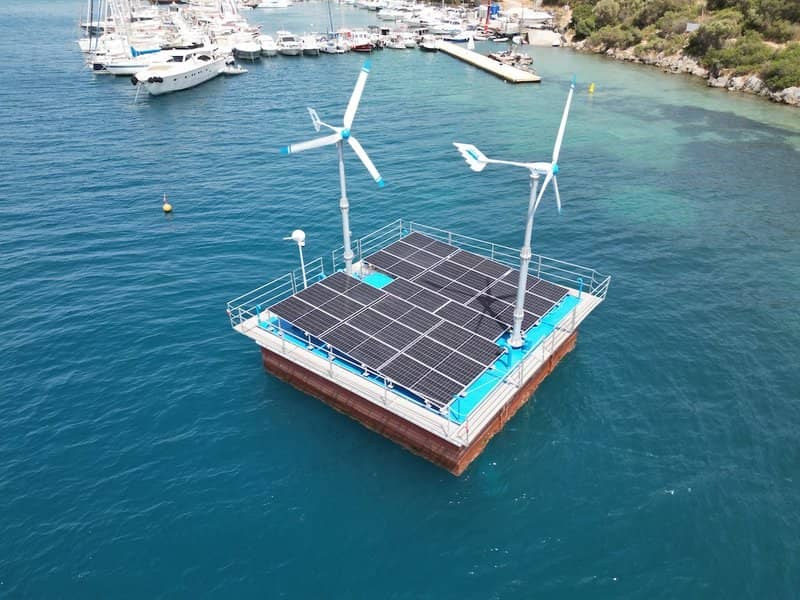
Two of Turkey’s most abundant resources – sun and sea – are being combined to create a very precious one: drinking water. In regions like Bodrum, Turkey, tourism’s seasonal population surges and climate-driven drought patterns put intense pressure on freshwater supplies. Water scarcity stresses the local infrastructure and resources which struggle to keep up with demand. Blue Hybrid Solutions Co Founder Muhammet Çoplan – who wrote a thesis exploring the relationship between energy and water – set out to prove that the resources that Bodrum already had in plentiful supply: the sun and the sea, were in fact the solution to their water scarcity …and that they could be transformed into a resilient source of drinking water without harming the environment. In an innovative partnership between Bodrum Municipality and Blue Hybrid Solutions, a Floating Sea Water Treatment Platform which produces potable water at scale, using 100% renewable energy, has been launched and is demonstrating its importance to the community. Coastal regions in sunny locations around the world are attractive to visitors – yet frequently don’t have sufficient natural water resources to cope with fluctuating demand. The water shortage is often exacerbated by climate change bringing extended periods of drought. Blue Hybrid’s desalination platform produces up to 18 tons of fresh water per day. The facility operates using reverse osmosis technology delivering potable water containing approximately 300 total dissolved solids (TDS) parts per million – from a raw water source which in the Eastern Mediterranean contains around 40,000 TDS. The platform is fully autonomous. Energy generation, storage, and water production processes are managed automatically without the need for continuous human intervention. The platform runs on 100% renewable energy, completely independently from the electricity grid or diesel generators. If that same volume of water – approaching 7,000 tons of water per year – were produced by a fossil-fuel powered desalination plant, it would result in 500 tons of carbon emissions per year. Bodrum Municipality Climate Change and Zero Waste Manager Ezgi Acer Çetinkaya said that the project is a concrete proof that technologies compatible with nature are possible beyond being a technical solution. Who wins? Local Communities gain access to clean water for domestic use and for public taps; recreational facilities such as parks can be irrigated; and emergency services have access to water, when required. Local government departments are able to mitigate pressures on their local water resource – sustainably. And visitors are able to enjoy their vacation without overburdening local resources. As Bodrum Mayor Tamer Mandalinci explains, the project is a local solution to a local problem — one that operates efficiently and sustainably without harming nature. The environment benefits from a low-impact, off-grid infrastructure that harmonizes with nature rather than depleting it. How It Works The platform houses a renewable energy system, smart energy storage, and water treatment plant. There are twenty solar panels rated at 595 W – offering a total 12kWp. Two 12 kW Wind Turbines. 84 kWh of energy is stored in a Lithium battery bank, ensuring 24 hour operation. There are three MultiPlus II 48/8000 Inverters together with an SMA 10 kW AC inverter. A SmartShunt 500A monitors power production and use from the wind turbines. The desalination process works by reverse osmosis. Seawater is pumped at high pressure through a semi permeable membrane to produce potable water which is safe for domestic use. The purified water is transferred to a 20-ton reservoir on land along food-grade hoses. Blue Hybrid’s desalination plants achieve an optimal efficiency of 3kWh of energy consumption for every ton of clean water produced. Monitoring over time has demonstrated that about one-third of that energy will be produced by the turbines and two-thirds will be solar harvest. The platform has been tested in some harsh weather conditions – let’s take a look at how it handles a severe gale force 9: The system is fully autonomous: energy generation, storage, and water production are orchestrated by an integrated management system that adjusts operations in real time, with no need for continuous human intervention. From Idea to Real-World Impact This project originated as a master’s thesis exploring the energy–water nexus and evolved into a fully operational platform through collaboration between engineers, marine specialists, and renewable energy experts. From prototype to patent application and, ultimately, to this pilot installation in Bodrum’s Bitez Port. The project demonstrates academic innovation through to real-world application. It was designed, installed, and commissioned by a multidisciplinary team with hands-on field experience in renewable energy systems, marine and floating structures, infrastructure, and business development. With long-term service and maintenance agreements in place the platform will deliver reliable, sustainable water security for years to come.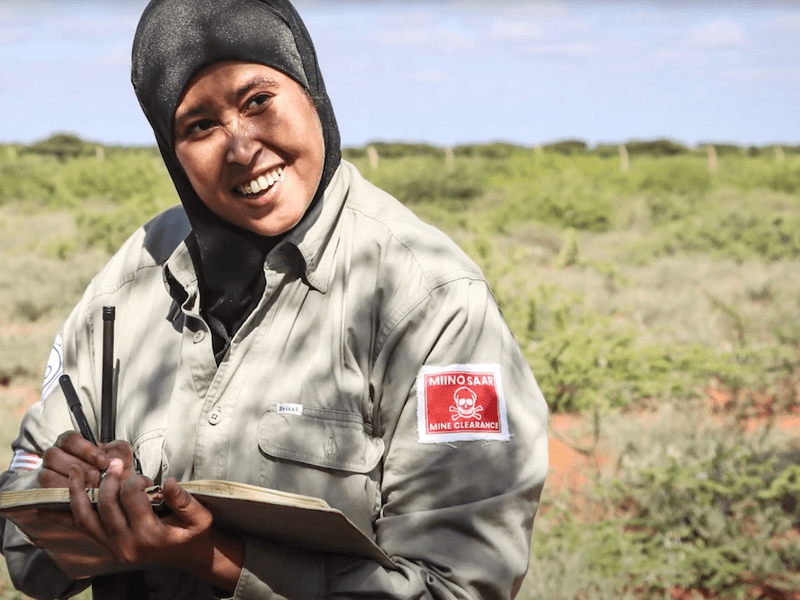
Justin Tyers • 06 March 2026
Is it safe to step outside?
Long after the guns fall silent, land mines and unexploded ammunition continue to blight the lives and livelihoods of people who live inside conflict zones. Everyday activities – fetching water, walking to school, grazing livestock – come with great risk for villagers living where war has been fought. The risk will not expire at some future date… each dangerous device must be found and made safe. For almost forty years, around the world, the HALO Trust have been training local people to do that extraordinary work. Landmine clearance and the discovery and disposal of unexploded bombs is dangerous but essential work if life is ever to return to normal after conflict. At the same time it’s essential to educate children and local people how to recognise and behave around suspicious devices lying half-buried in the ground. HALO have a team of educators working in schools and meeting places throughout conflict zones, around the world, teaching people how to stay safe. Conflict ends in Somaliland Somaliland is one of more than 40 countries where that work has been taking place. HALO has been working in Somaliland since 1999, clearing areas heavily contaminated with landmines and other explosives remnants of war since a cross-border conflict with Ethiopia which was followed by a decade long civil war. To carry out their program, HALO employ local people. Training local people to carry out this essential work provides much needed income streams in regions afflicted by poverty. More than 98% of staff in Somaliland are from Somaliland, and a quarter of the workforce are women. An important part of HALO’s work is to leave a legacy of change – the empowerment of women changes societies. Female deminers at Daragobyala village HALO works with vision – at the same time as conducting detailed searches for munitions, they take the opportunity to improve the land on which they work for farming and grazing, building water-retaining bunds and soil improvement measures as their work proceeds. HALO’s mission is to save lives and restore the livelihoods of those affected by conflict. Among the many challenges presented by working in remote and often poor regions is the lack of infrastructure. Admed Mohamed, Engineer Only 36% of the population in Somaliland have access to electricity, most of which is generated by diesel generators – which are expensive to run and difficult to maintain and repair. Reliable power is needed for HALO’s operational needs – so the organisation has invested in a number of solar power systems for staff working in rural camps which host up to 100 people for 25 days at a time – and also back at their HQ in Hargeisa. Installed by Solar Land Africa these installations provide power for recharging metal detectors, communication devices, and tablets – which are used for recording operational progress and mapping new minefields. GPS devices are used to demarcate new minefields and to pinpoint the location of explosive weapons which have to be destroyed. Reliable lighting supports staff safety and camp security, as well as providing illumination for living spaces, washrooms and toilets. In the kitchens, food can be prepared at dawn and dusk for the workforce, and staff can attend mosque and worship in comfort. Energy Security The power system in their Hargeisa office comprises: 27 x Solar Panels of 400W offering 10.8kWp There are three 5kVA MultiPlus II inverter/chargers There are two SmartSolar MPPT 250/100 solar charge controllers Five BYD LVS Lithium Batteries offer 20 kWh At the Bali Caabane camp twelve solar panels offer 6.66 kWp There’s a MultiPlus II 5 kVA inverter/charger A SmartSolar 250/100 MPPT solar charge controller Three lithium batteries offer 15.36 kWh of energy storage. And a Cerbo GX communication device allows remote system monitoring via the free to use platform Victron Remote Management (VRM) At the Caro Yaambo camp there are six solar panels offering 3.33 kWp There’s a MultiPlus II 5 kVA inverter/charger A SmartSolar 250/100 MPPT solar charge controller 10.2 kWh of lithium battery storage And a Cerbo GX communication device allows remote system monitoring via the free to use platform Victron Remote Management (VRM) During HALO’s almost forty years of operation they have cleared more than 14.5 million explosive items – including over 2 million landmines. Fourteen million people have benefitted from that work. They’ve conducted 487,000 local community awareness sessions to more than 9.1 million people. The Somaliland programme has cleared the equivalent of 45,739 football pitches of 13,000 explosive devices, including landmines, mortars, grenades and other hazardous items. This has benefitted more than 700,000 people, improving the physical security of the population, supporting local livelihoods through access to land and natural resources, and providing safe land for essential social development. Somaliland. Female deminers at Daragobyala village Funding Crisis Regrettably, the funding for the programme has been declining over the past few years and the continuation of this life-saving work is now under threat. HALO’s goal is to help Somaliland achieve mine-impact-free status within the next few years—an accomplishment reached by only a handful of countries worldwide. Without sufficient funding, the progress will slow and communities will remain exposed to the dangers of landmines for longer than necessary If you’d like to help HALO help local people to deal with the legacy of conflict, you can visit their donations page. Let’s hear from a member of the senior operational staff who was born in the region – Hassan Kossar: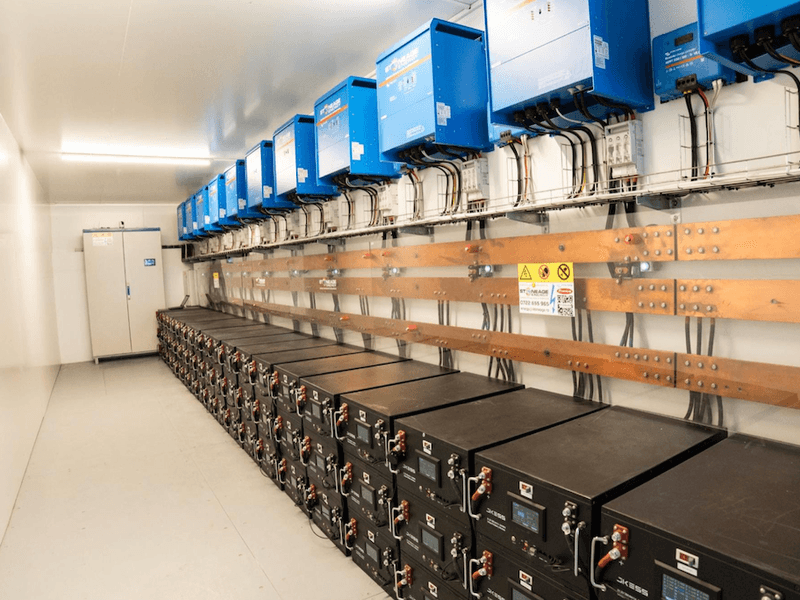
Justin Tyers • 20 February 2026
Poultry farm’s 1.3MWh storage
After months of work: evaluating the farm’s grid power consumption, followed by design then build of the containerised battery based power system – the time finally arrived to demonstrate the resilience of the Puiul Dobrogean poultry farm’s 180kVA private power plant …by disconnecting the electricity grid whilst the power consumption was running at 141kW! Nothing happened. In a good way. The load was transferred to the battery-based energy installation without so much as a flicker! The Romanian poultry farm consumes 1.5MWh of energy per day in the height of summer and had been relying on two back up generators to overcome grid failures; but when one of the generators failed to start – endangering livestock – it was clear that there was a vulnerability which could not be tolerated. Ionel Dobre – the owner of Puiul Dobrogean farm – started his business in 2012 and has expanded it steadily. For him this realisation of energy insecurity brought with it an opportunity – to make a financial investment to drastically reduce energy costs at the same time as guaranteeing energy security. The new installation is projected to supply between 93% and 95% of the farm’s energy consumption. (L) Ionel Dobre (R) Ovidiu Stan Ovidiu Stan is the General Manager at Stoneage Energy – who are based in Cluj-Napoca, Romania – and wanted to implement a technical solution which could charge this huge battery bank efficiently, and through all seasons – not just the summer. Based on the results Stoneage Energy had experienced with their previous large installations, they decided to increase the battery charging capacity by adding 12 MPPT solar chargers to the 12 Quattro Inverter/Chargers – to provide a additional 1200 amps of charging capacity. Storage: Over 1.3 MWh in 48V LiFePO4 batteries (Low Voltage). Low voltage was chosen for safety and because it allowed the use of the most robust inverters available. Inverters: 12 x Quattro Inverter/Charger 15000VA – capable of delivering 180 kVA and managing load peaks – 15000 models can actually handle 25000W peaks. AC/DC Architecture: A hybrid ecosystem using 300 kW of Fronius Tauro 100 inverters (AC-coupled) for direct daytime consumption and 12 SmartSolar MPPT 250/100 solar charge chargers = 1200 Amps (DC-coupled) to efficiently and directly charge the battery bank. PV panels: Over 600 bifacial panels rated at 645W (510 pcs on the 3 Tauros + 96 pcs on the 12 MPPTs) offer a total of ≈ 400 kWp. Monitoring: Cerbo GX & VRM Portal . Safety via Loop: The hall’s electrical grid was designed in an underground loop. If a cable is accidentally severed (e.g., by an excavator), power is supplied via the other arm of the loop, ensuring 100% continuity. AI Automations with Node-RED : Node-RED Temperature de-rating and shutdown code The system features several innovations developed by Stoneage Energy engineers specifically for large projects like this one, including: A huge pre-charge & emergency shutdown system, controlled by in-house software for controlling and monitoring more than 100 parameters of the whole system. Rapid shutdown & pre-pre-charge: For complete system disconnection in the unlikely event of any fault. Dynamic Power Balancing: For large systems when solar production is low and/or the grid is weak or unstable. Battery protection mode: Maintains a useful power reserve for power outages or a low next day power harvest forecast, consumption, and grid energy costs. Ionel says “Energy is monthly business cost. Once you install a system like this, that cost becomes an investment – this equipment is built to last 15-20 years.”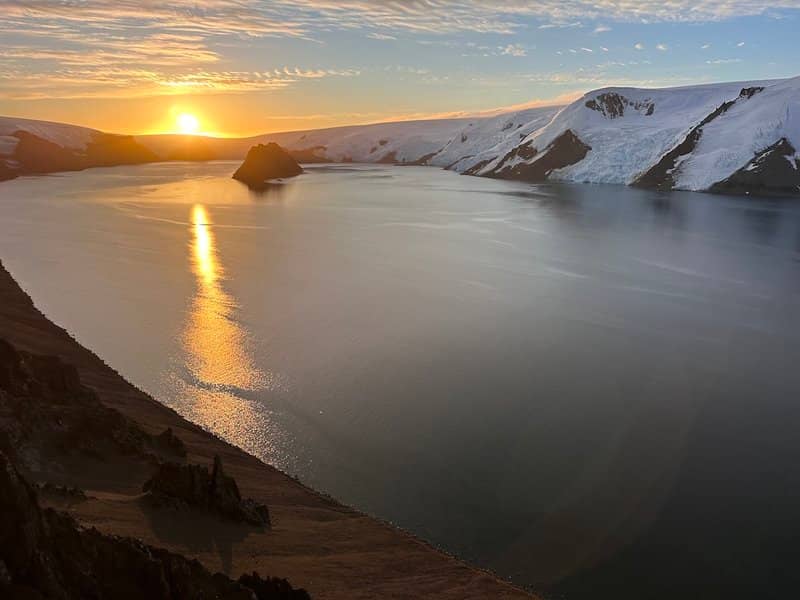
Justin Tyers • 20 March 2026
New Dawn for Antarctic Research station
Most Antarctic research stations rely heavily on diesel generators. The fuel has to be transported over vast distances at high cost and with environmental risks – a major logistical and technical challenge. The southern hemisphere Henryk Arctowski Polish Antarctic Station – which has been operational since 1977 – is undergoing a major transformation with the construction of a new research facility offering accommodation, laboratories, and recreational facilities, and supported by a huge investment in sustainable energy. The cutting edge design of the 1500m2 building secures it against the elements typically found in one of the harshest environments on Earth. Salt laden winds above 100mph are common, together with drifting snow – the aerodynamic design of this building experiences downward thrust owing to the propeller-shape of its abrasion resistant, three-arm, elevated plan – all of which is raised 3 metres off the ground. It also benefits from around 350kWp of solar array, together with 1MWh energy storage. Located on the shores of King George Island, at the northern tip of Antarctica, between 15 and 60 scientists from a wide range of disciplines: oceanography, glaciology, meteorology, seismology, geology, and ecology, amongst others, will be able to gather data and work for months at a time in secure and pleasant building which has clean and reliable power when the building becomes fully operational later this year. The original station – now almost fifty years old – was built just a few metres from the sea, but rising sea levels mean it is now just one metre from the sea and its decay is accelerating. The new building has been built 100 metres from the sea. Harvested energy is stored in 72 x 15kWh lithium batteries with a total capacity of > 1 Megawatt hours. The heart of the power system – which was built outside Warsaw, Poland by the team at Microgeneracja – was installed into a climate controlled shipping container for ease of transportation. This allows some simplification of the workload on location in Antarctica – but because of the location, some constraints applied. The maximum lift from ship to shore, for example, is 10 tons so the batteries had to be packed separately and installed in situ. It takes two weeks to unload the supply ship upon arrival. Carrying supplies for this huge and remote construction project the ship is well-laden – and not everything can be unloaded exactly when it’s needed. Working as part of the wider construction team, sharing challenges, Microenercja have installed 400 solar panels – often working during a gale – onto the roofs of sundry storage buildings. Marek Klonowski of Microgeneracja says the greatest challenge is that when you get to Antarctica there are no shops – in order to achieve success you have to arrive with everything you are likely to need. Energy from the solar panels is harvested by a number of Fronius Symo 20kW Solar Inverters. Two SmartSolar MPPT RS solar charge controllers are also installed – these powerful devices are designed for systems with large series connected PV arrays charging 48 V DC battery banks. 12 x Quattro 15kVA Inverter/Chargers provide the facility with AC power which is largely used for heating and in the kitchens. The Quattros are capable of providing a 2,400A charge current to the battery bank from generators, and from surplus energy harvested by the Fronius Symo Solar Inverters which are controlled by the Quattro’s frequency shifting ability. Automatic generator switching ensures that they will only run when necessary, and then at maximum efficiency. The station currently uses two legacy Volvo generators of 180kVA and 160kVA, but these will soon be replaced with two synchronised 250kVA generators. During the winter months when sunlight is weak and of short duration, it will still be necessary to produce energy from the generators. Power transfer at this scale needs robust and heat efficient bus bars. Sustainable energy systems not only reduce emissions but they will improve reliability, eliminating downtime; reducing the need for generator maintenance and the presence of engineers and – most significantly – reducing the need for fuel deliveries and therefore reduce the risk of contamination – one of the greatest operational risks in polar regions. Hydroelectric and wind power generation are under consideration for the future. The Arctowski Station – which is managed by the Institute of Biochemistry and Biophysics of the Polish Academy of Sciences has residents all year-round. Groups of Polish and International scientists conduct research on location in the Antarctic, receiving technical and logistical support to conduct their work. The new facility has been designed to comply with the Antarctic Treaty which places strict obligations on environmental protection. The station’s modernisation which is being built at a cost of over $46mUS, aims to ensure that Poland continues to meet these international commitments while maintaining a strong scientific presence on the continent. The roofs of ancillary storage sheds have been clad in solar panels which offer 350kWp. The new Arctowski Station is a glimpse into the future of polar research infrastructure—combining advanced science, sustainable design, and innovative energy systems. As climate change accelerates, the importance of Antarctic research grows. Arctowski is one of ten research stations in the region providing observation outposts which will help scientists understand processes that affect weather patterns, sea levels, and therefore worldwide ecosystems.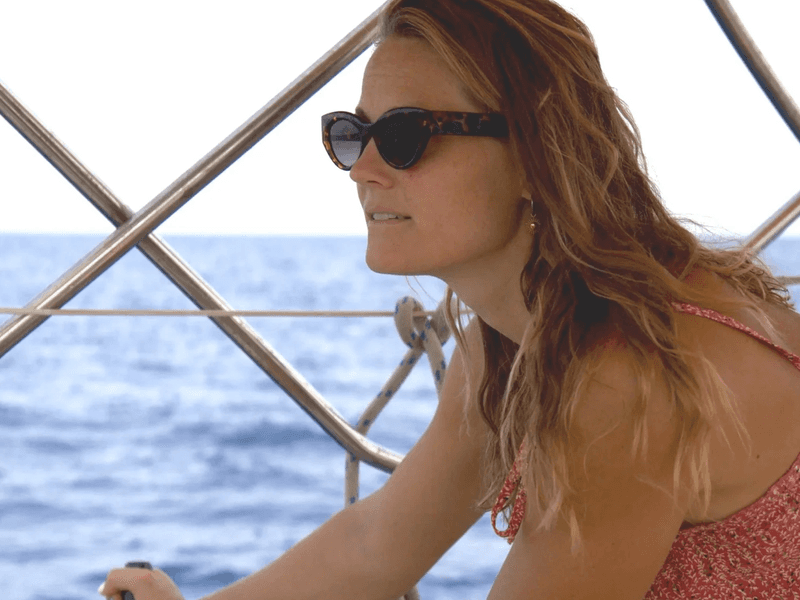
Justin Tyers • 13 March 2026
Thousands watching solo sailor
If you don’t easily get sea sick why not join Norwegian Helga Marie Løvenskiold Kveseth – who goes by the name Mara – on her LIVEstream as she crosses the Atlantic? Already having 25,000 miles under her keel, Mara is sailing her Saltram Saga 36ft double-ender called Showgirl to St Martin in the Caribbean in order to qualify for the Golden Globe Race 2026. The Golden Globe is an epic yacht race – more than twenty participants are expected to cross the start line later this year on September 6th to sail singlehanded around the world using only the equipment which was available to circumnavigators sixty years ago. Using a sextant to make celestial observations, and plotting their position on paper charts, skippers spend nine months at sea crossing world’s remotest oceans in their grandest moods. It’s not for the feint hearted. For her qualifying passage Mara’s boat is equipped with the latest technology in order to bring us closer to the experience of sailing alone. Her 24 hour live stream via Starlink router, together with other domestic conveniences, uses a lot of power, The original electrical system onboard was unable to support the planned loads so she enlisted the help of Sea & Land Yacht Works to do a power audit of all her domestic and navigation devices and provide a system which could support the ambition. Sea & Land Yacht Works is a marine service provider based in Rhode Island U.S. specializing in marine electronics, electrical and marine systems. Interestingly, they offer their technical service all round the world by contracting qualified installers to build systems from their drawings, using specifications which meet ABYC certification standards. Company founder Michael Garretson is an AYBC Master Technician and also a Mechanical Engineer. Working from his drawings installer Electrical Marine Services Gibralter built Showgirl’s power system in Gibralter just before Mara set off on her solo transatlantic passage. Power Assumptions The power audit for Showgirl’s electronic devices suggested a daily power consumption of 492Ah Equipment Load Fridge 60 NAV Instrument 45 Starlink 240 Rasberry pi 28 Camera 47 dgi 16.3 random cameras 7.5 VHF 12 Lighting 15 Phone charging 2 handheld 0 Watermaker 19 Total: 491.8 In order to provide that power three power generation sources were installed: Showgirl’s four solar panels of 100Wp each would typically provide 116Ah per day . The solar harvest is controlled by two MPPT solar charge controllers of 100/30 and 75/10 to charge a 12V lithium battery bank of 960Ah. As the vessel sails a Watt&Sea Hydrogenerator 600 produces power. Assuming an average speed of 4.5knts, that model will produce 157Ah per day There’s a 275A alternator on board controlled by Arco Zeus 275L alternator regulator to maximise the power harvest. Running the engine at 1500rpm for an hour is likely to produce 230Ah . Total daily production from power generation is 503Ah . Power consumption and harvest is monitored by a number of BMV battery monitor across the MPPT solar chargers, alternator output, Watt & Sea hydrogenerator output, and the lithium battery bank loads. There is an Orion DC to DC charger to manage battery charging for Showgirl’s dual battery systems – engine starting and domestic use. A MultiPlus 12/1600/70 Inverter/Charger provides AC power. A Cerbo GX communication centre harmonises all Victron and third-party devices and makes real time data monitoring and programming available from anywhere in the world via the Starlink satellite router. The same information is just a fingertip away on board via the GX Touch 50 user interface. Showgirl is a little more than halfway across the Atlantic at the time of writing. Once she arrives, Sea and Land Yacht Works plan to install more custom solar panels and additional electrical work before she recrosses the Atlantic a few months later – live streaming again – in preparation for her Golden Globe Race participation. You can ask Mara a question via the live chat function of her LIVEstream. She typically makes time to answer questions on camera after sunset each day – her time. She says she’s going to miss all the live chat on her Golden Globe Race! Let’s see how she’s getting on: If you’re already in the Caribbean on board a boat – and particularly if you want to find out more about reliable power or workshop a power problem – take a look at our recent story here.
Justin Tyers • 27 March 2026
Four Season RV with Solar Power
“ I ordered my AEV Prospector and Four Wheel Camper in December 2020, took delivery in September 2021, and began full-time overland travel in October 2022. My journey has taken me through virtually all of the 48 contiguous United States. I particularly enjoy traveling Backcountry Discovery Routes (ranging from 150 to 1,500 miles), exploring vast National and State Forests (from 100,000 to 3.5 million acres), grasslands, and other remote wild places.” This week let’s meet Chet Szymecki – who posts on well-known RV community boards as RamblinChet. Data from Chet’s meticulous research and record keeping will be useful to many leisure explorers who are interested in worry-free mobile power, without plugging in. “A key question I had was whether a properly engineered solar power system could sustain daily needs without relying on a generator, shore power, or frequent interventions. The data shows that it can – and reliably so.” On the roof of his RV he has two solar panels rated at 250W each. Chet’s travels take him through Forest and mountain – as well as the plain – so that his panels are often in partially-shaded locations. The biggest power load in his set up is a National Luna 80L refrigerator, which is always on. He also charges his laptop, phone, LED interior lights, a fan, and Bluetooth speaker, among other loads. “To my knowledge, no other full-time overland traveler has publicly documented a continuous six-month period using only solar power across such varied conditions: snow in the Northeast, heavy rain, extended overcast, broken clouds, full sun, dense tree canopy, shadowed backcountry roads, and open routes. I have tracked solar production, energy consumption, battery state-of-charge (SOC), and related metrics month by month, sharing the detailed findings. The average daily consumption over these 182 days was approximately 560 Wh (102 kWh total / 182 days = 0.560 kWh/day). My intent is to provide practical, data-backed information that may assist others in designing or refining their own systems.” Chet’s solar power is harvested by a SmartSolar MPPT 100/30 solar charge controller for storage into 2 x LiTime 12V 100Ah Group 24 LiFePO4 batteries. He has a BlueSmart IP22 battery charger 12V-30A and an Orion XS 12/12-50A DC-DC charger – but neither device was used during this data period. The objective was to evaluate the solar system and battery bank capacity to support off-grid travel demands. After exercising the system for six months, covering 4,752 miles of overland trails, and with temperatures between14°F/-10°C to 88°F/31°C, there were no significant issues through fifteen states: Alabama Connecticut Florida Georgia Maine Maryland Massachusetts New Hampshire New York North Carolina Pennsylvania Tennessee Vermont Virginia West Virginia Daily consumption averages by month: 0.600 kWh/day (18 kWh / 30 days) in September 0.516 kWh/day (16 kWh / 31 days) in October 0.500 kWh/day (15 kWh / 30 days) in November 0.548 kWh/day (17 kWh / 31 days) in December 0.581 kWh/day (18 kWh / 31 days) in January 0.643 kWh/day (18 kWh / 28 days) in February “Initially, this adventure was something for me – a long-held dream to retire early, explore mountains, forests, deserts, swamps, islands, small towns and backcountry roads, and focus on improving myself physically, mentally, and spiritually. Over time it has quietly transformed. While I still deeply enjoy nature’s beauty, the journey has become more about putting others’ needs ahead of my own. We live in challenging times, and I feel truly blessed that I’m occasionally able to help others in small but meaningful ways – often simply by listening without judgement, truly seeing them for who they are, and offering a kind word or the promise of praying the rosary for them that night and just being a friend.” The histogram of maximum daily SOC over the most recent 28 days (February) shows values ranging from 81% to 100%, with 24 days between 90% and 100%. Full charge (100% SOC) was often reached confirming adequate solar capacity under February conditions – one of the lower-yield periods due to shorter days, sun angles, and frequently overcast. Performance should improve in March and April as insolation increases. The system met and exceeded the design objective of providing at least seven days of autonomy using solar alone, sustaining operation for the full 182 days. The best parts of this life are the quiet mornings in wild places, the ever-changing landscapes, and these unexpected human connections. The hardest parts are the loneliness that sometimes appears, and not being able to share these adventures with a wife. With long hair, a beard, and so much time spent alone in the wilderness, the odds aren’t great. If it’s meant to be, it will happen. My travel rhythm has also evolved. In the beginning I was constantly on the move, sleeping somewhere new almost every night. I’ve exercised my self-discipline and I’ve learned to slow down, stay longer in places, and truly savour the local history, culture, and cuisine. For the past month I’ve been exploring the Everglades and islands of the Florida Keys, often staying two or three days on one island before moving just a short distance to the next beach or trail. The histogram of minimum daily SOC for the same period ranges from 70% to 92%, with 18 days between 80% and 90%. Minimums typically occurred just before sunrise. The design target was to keep SOC above 25% under normal use; the lowest recorded value of 70% (with all others higher) indicates strong margin and reliable performance. The screenshot below, captured from the Victron Energy solar charge controller, shows the energy harvest over the past 28 days. The white portion of each column represents the percentage of time spent in Bulk charge mode, while light blue indicates the Absorption phase and medium blue denotes the Float phase. The data shows that the system reached the Float phase most days. The batteries were fully charged 80% of the time. RamblinChet’s electrics are mounted into a Zarges K470 aluminium case. Chet spent a great deal of time researching the power components he would use during his extended journey; and having made those choices, drew up and then rejected twenty or so design layouts until arriving at the optimum installation arrangement in his $900 case. Information displays and power switches are presented on the front panel following the same logic as a flight cockpit – six pack of primary gauges in the center and controls grouped by function, importance, and frequency of use. The top surface of the box houses a Wallas Nordic DT diesel stove whose exhaust is routed through the inside of the box in such a way that the electronic devices were not affected by physical contact, and remain well within their operating temperature range. That’s a pretty tall order – a number of his contacts, who know what they’re talking about, advised against it. But Chet approached this design as an engineering proof of concept, and experience has shown that the arrangement is successful. Working with detailed product information from the manuals and data sheets helped Chet understand the opportunities and limitations which would affect his design. Wiring gauges were calculated with the help of Wiring Unlimited ; all fuses are premium quality – the number one priority of the whole installation being fire safety, urged on by the unfortunate experience of others. Looking back on his working life experiences, Chet says: “After a long career working primarily in mechanical and electrical systems, I spent most of my professional life as a Technical Project Manager with a focus on robotics and automation. I had the privilege of working at companies such as Lord Corporation, Siemens VDO, Swisslog, and NASA Langley Research Center on projects including the Mars Science Laboratory Entry, Descent & Landing Instrument (MEDLI), the Program to Advance Inflatable-Decelerators for Atmospheric Entry (PAIDAE), and the Autonomous Landing Hazard Avoidance Technology (ALHAT).” The first image Chet sent us to illustrate his journey was of a leaf, covered with dew. We wondered why. It’s fitting to close this story with Chet’s words, which resonate with us all. “ I got up early and went for a walk in the forest by myself. My mind was pretty heavy with thoughts about some of the men I served with – their faces kept coming back to me, and how their deaths never felt like heroic sacrifice or anything glorious. To me they just felt futile, wasteful, and tragic. I spent a good while walking and praying for their souls. Then I almost stepped right on this one autumn leaf lying flat on the ground. I stopped, knelt down, and just looked at it for a minute. The raindrops on its veins were catching the light like small rosary beads. It hit me how beautiful it was in its own quiet way – its green days were over, it had done its job feeding the tree and dancing in the wind, and now it was just surrendering, giving itself back to the soil for whatever comes next. For some reason it felt like God was showing me something right there – like there’s this careful, holy beauty even in endings that we usually just walk right past without noticing. I pulled out my phone, snapped one picture, and wrote those words for the picture on the spot. My eyes became heavy while composing my thoughts. When I got back in the truck and started driving along the trail (NEBDR), I rolled the windows down and played Albinoni’s Adagio in G Minor softly. That song always takes me straight back to the end of an old movie Gallipoli from the early 80s – young Mel Gibson is in it. If you ever watch it, you’ll see what I mean. Those young guys running into machine guns – it just breaks your heart because it was all so pointless. That little leaf became a kind of symbol for me of all those lives that end too soon, and how easy it is to miss the sacredness in them unless you slow down and look closer .” You can follow Chet, hear more about his system, follow his journey. and ask questions here on the Victron Community .
Justin Tyers • 17 April 2026
Iman Verte
Lycée Iman is a school in Nouakchott, Mauritania, with over 500 pupils from nursery age to seniors. The school’s management decided to invest in a multi-faceted educational sustainability initiative which would help its pupils to learn about solar energy, water sustainability and waste management. The most ambitious part of the programme was for the entire school to become self-sufficient in solar energy. Because the city’s electricity grid is unreliable they had for many years relied on a 65 kVA generator to run their air conditioning units, lighting and educational aids during blackouts. Several obstacles to energy independence lay ahead! An initial site survey by the school’s chosen solar installation partner, SEEMA SOLAR , found that the AC electricity distribution already in place – wiring, switches and sockets – was in a dangerous condition such that it was exposing students and staff to risk. Seema Solar’s three month installation project began with re-wiring switches and outlets in order that their new power supply would be safe for use. As part of that renewal, the old air conditioning units and fridges were replaced with more energy-efficient models in order to optimise the school’s overall power consumption. As a result, since December 2025, the school has been self-sufficient in electricity. The new installation is grid-tied so that the electricity grid can provide back-up power if required. The introduction of reliable power has brought forward an evolution in the school’s teaching practices: in the past, lessons were mainly conducted using chalk and blackboard – whereas today, it uses video projectors. There’s been a transition to digital learning too – a major advancement which has improved the quality of education and brought the school up-to-date with today’s educational needs. Regardless of network blackouts in the city outside, the school’s power – including lighting, IT, and educational devices – is now guaranteed. SEEMA designed, supplied, and installed a 72 solar panels. 30 kWh of Lithium storage and an AC output power of 50 kVA. The power installation consists of: 24 kWp of single-phase low-voltage PV modules 3 SmartSolar MPPT 250/100 solar charge controllers 3 MultiPlus-II 48/10000/140-100 panels 1 Fronius SYMO 20 AC Inverter 6 Lith-Tech TBX4000 / 51V-100Ah batteries A Cerbo GX provides data communications between devices, live system data to the GX Touch 70 local user interface, and also remote access allowing Seema to monitor and manage the system instantly via Victron Remote Management VRM . With uninterrupted power supply 24/7 the school is proud to have reached this important milestone of transitioning to clean energy. The “Green Iman” project uses the electrical grid very little and the generator has been removed. Students are made aware of the challenges of future energy and eco-friendly practices, while some teachers integrate these themes into their teaching methods to raise awareness from an early age. Seema Solar undertook the entire project themselves, from technical design and equipment procurement, through to the commissioning of the solar installation. Seema will support Lycée Iman in the longer-term, offering continuous technical partnership to ensure the system’s flawless performance and reliability. Seema also takes the opportunity of this initiative to teach students and staff about renewable energy. Moctar ETHMANE – owner at SEEMA SOLAR – says: “ The main challenge was, above all, the financial aspect. In Mauritania, there are very few support mechanisms for this type of initiative, and the school had to finance the project entirely from its own funds to transition to solar energy .” “ Another major challenge was the initial condition of the electrical installation, which did not meet standards. From our very first contact with the school, this was identified as a critical issue, ” he says. The school is located at the edge of the Sahara desert – unsurprisingly intense heat is often an obstacle to work. Frequent voltage drops on the electricity grid prevented the air conditioning from functioning properly – a situation which directly affected learning and sometimes impacted on students’ health. Moctar says that they are particularly satisfied to have ensured a stable power supply which provides students with a safer, more comfortable, and more suitable learning environment. The project was a major investment for Lycée Iman. The funds used for the sustainable power transition were their own. In tribute to the school’s management team, Moctar says: “ Most importantly, we are proud of the quality of the collaboration with the school’s management, who trusted us from the beginning and fully supported the implementation of this project .” You can contact, connect and follow Seema Solar at their social media sites at LinkedIn and Facebook . Let’s take a look at the school and what has been achieved: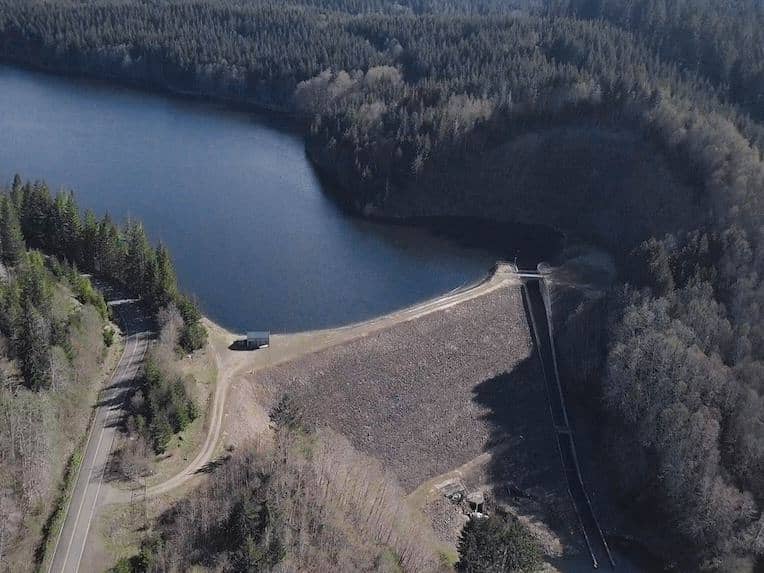
Justin Tyers • 20 May 2026
Energy security guarantees town’s water supply
A remote reservoir which provides drinking water to over 35,000 customers is entirely monitored and controlled by an off-grid power installation which must not fail. Electricity energises their control systems, operates the water treatment plant, and opens and closes pump valves. The lead acid batteries which had provided back up power were coming to the end of their life, but also the site operator, McMinnville Water & Light, based in Oregon, U.S., noticed that staff were having to spend much more time at the facility – finding problems, analysing power information and putting mitigations in place. The system was old and difficult to work with. Understanding the problems facing the water engineers enabled power system designer Artek to reimagine their installation; to choose the hardware, and to tailor the software to offer an optimised power installation which meets their needs uniquely. Working alongside Cascade Solar , the challenge was to add provide redundancy, meet highly variable load demands, provide remote data communications, comply with strict seismic requirements, and to make the power system easier for their technicians to read and understand with clear live data information. * Sam Reiser, Lead Engineer: A Victron Energy system tailored with Node-RED flow meets McMinnville Water and Light’s needs precisely. At the heart of the installation is an 80kWh, 48V Lithium NG battery bank which are managed by dual Lynx Smart BMS NG units. The duality of the installed architecture adds an important layer of redundancy and protection—critical in an environment where maintenance access is limited and failure mustn’t be allowed. Power delivery at the site is split across two inverter-charger systems, each designed for a specific role: In the first instance a MultiPlus 48/2000 operates 24 hours per day, providing the power required to monitor and control the site’s equipment. The operators have clear visibility of the system’s status via the GX Touch 70 and can maintain control of water flow infrastructure. * Jordan Burgess, Embedded Systems Engineer & Garmin Support Alongside it, a more powerful split-phase system comprised of dual MultiPlus-II 48/5000 units handle the site’s high-demand loads – powering the nitrogen accumulation pump used to actuate hydraulic valves. They also manage battery charging when a generator is running. The battery system is housed in seismically rated Rittal enclosures, ensuring structural integrity and compliance with local codes. This dual-inverter architecture allows the system to efficiently balance continuous low-load demand, punctuated by intermittent high-power requirements. Node-RED flow provides bespoke automation Rather than running the larger inverter system continuously, Artek implemented a demand-driven control strategy. Using a Cerbo GX as the central communication hub, custom Node-RED logic was developed to deliver inverter operation idealised for real site conditions. The system responds directly to signals from an Allen-Bradley PLC, which indicates when pumps are running—or need to run. When that signal is activated, the split-phase MultiPlus-II system comes online. When it’s not needed, the system remains idle – reducing standby consumption and improving overall efficiency. The same logic also responds to generator activity. The generator has an auto start – triggered by a preset battery state of charge – and the MultiPlus-II’s begin to charge the depleted battery bank at maximum generator efficiency. The implementation includes: Custom Node-RED control logic triggered by generator state and a pump-demand input Automatic/Mode control for the split-phase inverter-charger system Continuous-power architecture preserved through the always-on primary inverter-charger Custom gui-v2 QML overrides for combined AC load visibility across both inverter systems Native Cerbo GX Modbus integration retained for SCADA communications Deployment tooling for GX UI updates, flow deployment, backup, and rollback These enhancements keep the system simple for operators while ensuring power is always available. Solar and redundancy design Battery charging from a 5kW solar array is split into three independent strings, managed by three SmartSolar MPPT 250/70 VE.CAN charge controllers. If one part of the array is offline, the rest continue to operate, offering system resilience. To meet local safety standards, the array also integrates Tigo rapid shutdown which allows module-level de-energisation for maintenance or during emergency situations. Better visibility, better decisions For operators on site, understanding system behaviour quickly is crucial. Artek have extended the Venus OS interface on the Cerbo GX by providing a custom GUI modification which offers a combined view of the total AC load across both inverter systems. This gives technicians a clearer, more intuitive understanding of what the system is doing at any moment, improving troubleshooting and confidence in operation. Unnecessary complexity was avoided by employing the Cerbo GX’s native Modbus capabilities for SCADA integration, focusing customisation only where it delivered real value. Who benefits? This installation supports the entire McMinnville community. Reliable water supply depends on reliable energy, and this system ensures that critical infrastructure continues to operate regardless of grid availability. At the same time, site operators benefit from a system that is robust, efficient and easy to manage. Demand-driven inverter control reduces fuel use and wear on equipment, while improved visibility makes day-to-day operation more straightforward. In McMinnville, the water will keep flowing.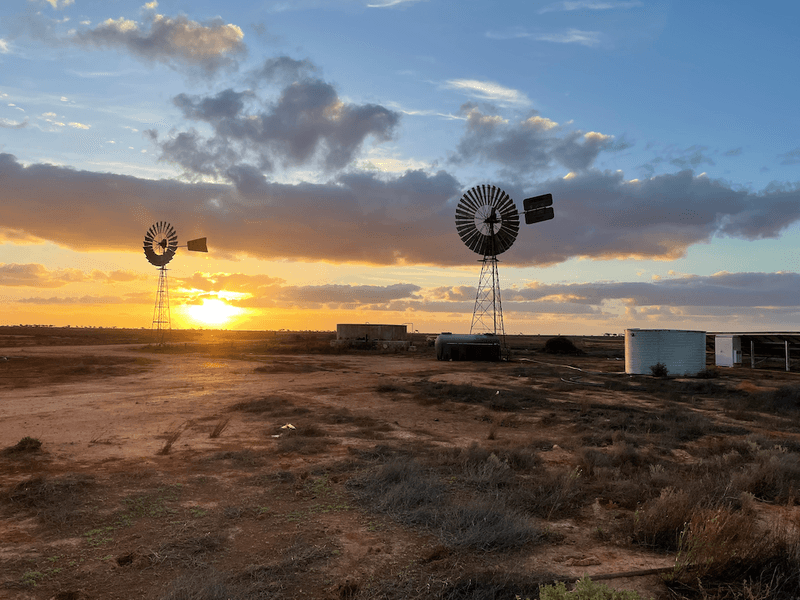
Justin Tyers • 29 May 2026
Irrigating Two-million Acres
Madura Plains is a remote sheep station on Nullarbor, an arid, treeless limestone plain of 200,0000km² in south Australia. Its viability depends on bore holes, tanked-reservoirs, and a pumping system through 1400km of water pipelines to over 200 drinking troughs. Until recently water provision across the property relied on a variety of pumping arrangements which required station staff to visit and check water points in 118 paddocks along 380km of tracks. It’s tough on people, and it’s tough on vehicles. Conditions are harsh, the water is sometimes brackish, and it’s worse during dry seasons. The station was looking for a more efficient way to pump water through their network, and wanted to reduce the need for physical inspections at remote bore and reservoir tank sites. Off-grid energy specialist MyEnergy Engineering knew how to solve both problems. The technology they introduced wasn’t just a massive power upgrade using renewable ‘free’ electricity, but it inaugurated a new era of communication and control – providing remote tank-level information and pump operation. Water is one of the most important jobs on the station. The system had to be designed to handle three-phase pumps with high inrush current reliably while still being practical for a remote site. My Energy Engineering’s CEO Ciaram Granger says: “ That is where the Victron equipment was a strong fit, particularly because of the way the Quattro systems can work with solar, batteries and generator backup.” At the station’s Homestead, Quattro inverter/chargers provide 45kVA three-phase power from a 96kWh Pylontech lithium battery bank supported by a 44.28kW Trina solar array using SmartSolar MPPT RS solar charge controllers which are suitable for large PV arrays charging a 48VDC battery bank. There are also a further three remote bore sites which are powered by three 8kVA Quattros inverters offering 24kVA and configured for three-phase supply; each installation has a 42kWh Pylontech battery bank, and a 29kW Trina solar array, SmartSolar MPPT RS and Cerbo GX communication centres. They also have backup generators for use during low-solar periods or during high-demand. In each system the Cerbo GX communication centre maintains control over all devices. The data it monitors allows for completely automatic generator on/off control, triggered battery state of charge or high current consumption. Using Victron Remote Management ( VRM ) staff can view and control water pumping sites without visiting them. When resources – such as water – are finite, they need to be constantly monitored and decisions made according to abundance or scarcity. The Cerbo GX accepts digital inputs – in this case from water tank senders – allowing them to be monitored remotely via an internet connection, and pumps can be controlled. For Madura Plains, with its huge scale operation, this is a breakthrough in efficiency. Instead of relying on in-person visits for manual checks, the pumps, tank-levels and the installation’s battery status can be monitored remotely, by fingertip. It eliminates unnecessary driving so that staff can concentrate on the areas that need attention, to solve problems which have been spotted sooner than was previously possible. The station owner has found the improved water reliability is a real turning point for his operation. Better access to cleaner, cooler stock water allows the station to operate with far more control – especially during dry spells. A Sense of the scale Madura Plains has around 60,000 sheep and 3,500 Boer-cross goats. There are over a thousand kilometres of fencing which divides the station into 118 paddocks, reached by 376km of track. There’s a 10,000-head feedlot and holding yard; and the whole operation runs successfully amid the heat, dust, and remoteness of its location. The installation challenge Ciaram Granger says: “T he challenge was to design and install a solar system with the reality of the site in mind: long distances, limited access, harsh weather – heat, dust and isolation – and the need for the system to keep doing its job with minimal intervention. Bore pumps can be demanding – especially when starting and running three-phase equipment in a remote location. ” Greg Tonkin is the lead electrician at MyEnergy Engineering, specialising in the design and installation of solar PV systems for off-grid applications. His commitment to safety, adherence to local regulations, and proficiency in preventative maintenance and troubleshooting are key aspects of his role and won him State Level (SA/NT) Master Electrician (Tradie) of the Year through the Master Electricians Australia awards in 2024. He has his own hobby farm, so he’s already good with animals. Just as well because during construction of the remote installations he and his colleagues had to camp in swags on site, sharing floor-space with hundreds of Lizards. Speaking about what My Energy Engineering has achieved here, Ciaram says: We are proud that the system supports the practical day-to-day running of the station – the homestead and the remote bore sites, but more importantly, it helps keep water moving where it is needed. On a property of this scale, reliable power at a bore site is not a convenience, it’s part of the station’s core infrastructure. This is the type of work MyEnergy is built for. A lot of our projects are in remote or demanding locations, including agricultural, commercial, industrial and station applications. The common theme is that the system has to be practical, reliable and matched to how the site actually operates.
Justin Tyers • 08 May 2026
Passenger elevator powered by acoustic barrier
In Warsaw’s Gocławek district, a stretch of everyday infrastructure has been reimagined. A busy viaduct carrying traffic over the PKP Warszawa-Gocławek railway station which has acoustic barriers are now doing more than simply reducing noise — they’re generating energy. Powering the passenger elevator which connects the flyover to the railway platform below, this first-of-its-kind installation is fully-operational, and in daily-use. The project began when the administration of the City of Warsaw wondered whether the acoustic barriers installed in close proximity to the elevator shaft – which has a constant power demand – can be used to do both jobs. The question resulted is a system where renewable energy generation and infrastructure resilience go hand in hand. The acoustic barriers continue to reduce traffic noise Integrated PV modules generate electricity A Victron-based energy storage system ensures continuous operation of the elevator’s HVAC and safety systems – and during grid outages, the elevator runs on renewable battery power, maintaining safe conditions for passengers. Custom Acoustic-PV Hybrid Panels The upper section of the existing noise barriers has been replaced with custom-engineered acoustic-PV panels developed by Alfa Bond Kohlhauer . Each panel integrates a full-size, high-efficiency 590 Wp solar module into a structure designed to preserve acoustic performance – colour matched to the existing street furniture, and of a slightly raised height to show off the innovation. In total, 8 panels deliver a 4.72 kWp system. The panels are mounted vertically as part of the barrier structure not at the typical 30°–45° tilt. While vertical mounting reduces peak output, it offers some advantages: Better generation during mornings, evenings, and winter months Improved self-cleaning due to rain runoff Lower maintenance requirements Expected annual yield is approximately 4 MWh, with real-world best-daily production reaching around 20 kWh. Live, historic, and accumulated data can be viewed on the installation’s publicly available Victron Remote Management page . DC-Coupled Storage The system was designed and built by ENERP featuring DC-coupled architecture, optimised for efficiency and simplicity: MultiPlus-II 48/5000 SmartSolar MPPT RS 450V solar charger Lynx Distributor & Lynx Power In Cerbo GX with VRM monitoring 15 kWh Pytes battery storage By avoiding a traditional AC-coupled inverter, the system benefits from higher round-trip efficiency; direct battery charging from PV and reliable operation even in passthrough mode. Built for Real-World Conditions All system components are housed in a custom stainless-steel enclosure built by Strabag and designed for roadside conditions, including integrated cabling through the viaduct structure, and the elevator shaft. The electricity grid supplies power to the elevator under normal conditions – the elevator HVAC is powered by the inverter. However, when there is a grid power failure the inverter takes over the elevator operation. A New Use for Urban Space Warsaw’s broader goal is to explore “non-obvious” locations for solar deployment. Rooftops and solar farms are already well utilised but within cities there are many vertical surfaces along highways, ring roads and expressways which use noise barriers and could support more solar panel integration if this pilot scheme proves economically successful. The results are encouraging. If performance continues as expected, the concept can scale across thousands of metres of acoustic barriers throughout cities. It’s an example of how thoughtful system design and integration can take existing infrastructure and add value.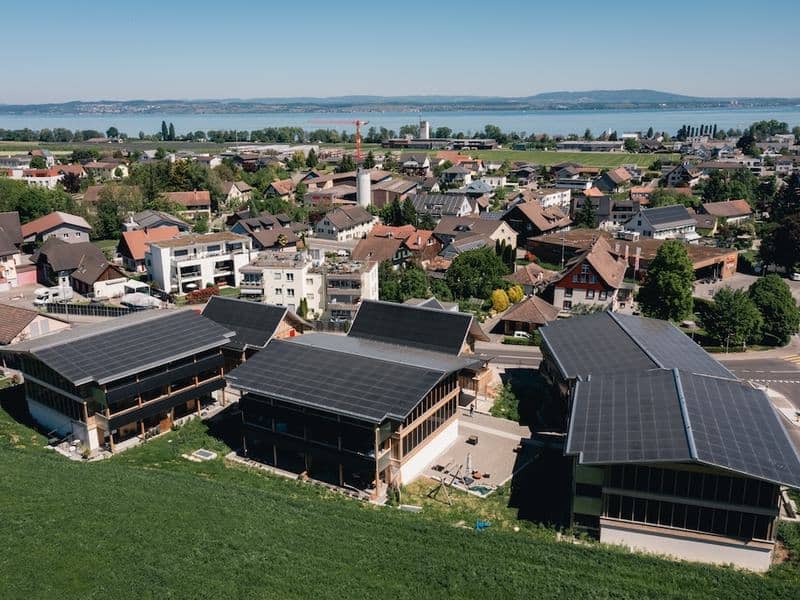
Justin Tyers • 10 June 2026
Community generates four times the energy it consumes
Viewed from the village square, Alte Schmitte appears to be an ordinary residential neighbourhood. PV modules are integrated into roofs and façades rather than added as separate elements, allowing the buildings to exhibit a cohesive architectural appearance. Behind that appearance, however, is an energy system that enables twenty-seven households to live in a community which generates far more electricity than it consumes. More than four times as much, in fact. The community is in the Swiss village of Güttingen which lies on the shores of Lake Constance. A former smithy – Alte Schmitte – was redeveloped into an energy-efficient residential neighbourhood. The development consists of six buildings: four are newly-constructed timber buildings, two are historic houses which have been renovated. Together they provide 27 rental apartments in the centre of the village – new housing which preserves the character of its village location between the church and community centre. The project received both the Norman Foster Solar Award from the Swiss Solar Prize and the European Solar Prize 2025 in the category of Solar Architecture and Sustainable Design. With high levels of energy efficiency the buildings use a Minergie-P building envelope, sheep’s wool insulation, geothermal heat pumps and passive cooling. Minergie-P is a Swiss building certification similar to Passivhaus. The solar based power system was designed, programmed and is maintained by Solar Energy Anstalt . The photovoltaic array measures more than 3000m² and provides 413.7 kWp of generation capacity across roofs, balconies and building façades. The annual electricity production from these panels is 371,000 kWh, yet annual energy demand from the twenty seven occupancies is around 92,400 kWh – most of the surplus energy is exported to the public grid. Six MultiPlus-II 48/15000 inverters configured for three-phase supply provide 90 kVA of power. They’re sized for peak loads, rather than annual kilowatt-hours. In off-grid mode, whenever the grid has failed, this architecture is designed to supply priority loads via a separate emergency power sub-distribution system: that ensures continuity of building services, elevator, ventilation, control systems, lighting, security, and access control. It’s important to note that when the grid fails the MultiPlus-II inverters make the switch to private supply in under 20 milliseconds—faster than a conventional UPS. Charge Control of the extensive solar arrays is provided by numerous Solar Charge Controllers including the SmartSolar MPPT RS 450/200, SmartSolar MPPT 250/70 ‘s, and SmartSolar MPPT 150/20 , models. Groups of charge controllers are daisy-chained to provide synchronised battery charging as the sun-shadow moves around the development. In practice, this configuration allows between 100 to 140 MWh per year to be generated by day yet used in the evening and overnight, allowing a self-consumption percentage of between 55–70%. And in the event of a power outage, the 400kWh Pytes battery bank can easily power the neighbourhood’s prioritised services for a full day and night. The Pytes batteries and Cerbo GX are connected by a VE.Can-to-CAN-bus BMS cable. All battery-side data flows into the Victron system and from there to the Victron Remote Management VRM Porta l for remote access, alerts, and long-term logging. Technical support and system integration were provided by Franz (Solar Energy), the Victron sales partner for the project. Project management was handled by Fabrice from the architectural firm Giuseppe Fent AG . Integration of the Pytes battery system with Victron technology; configuration of battery communications, Fronius PV inverters are controlled by the MultiPlus II’s for charging the Energy Storage System (ESS); and provision for data collection and long-term monitoring has been enabled for the Zurich University of Applied Sciences ZHAW Winterthur have all be commissioned and are running successfully. Timber construction and façades made from Swiss silver fir were chosen as part of the overall design approach. Near Vertical mounted solar panels seem to contribute well to the clean aesthetic without detracting for the timber frame. Both the buildings and their technology fit easily into their historic setting. Images are by Julian Schmelz Inger.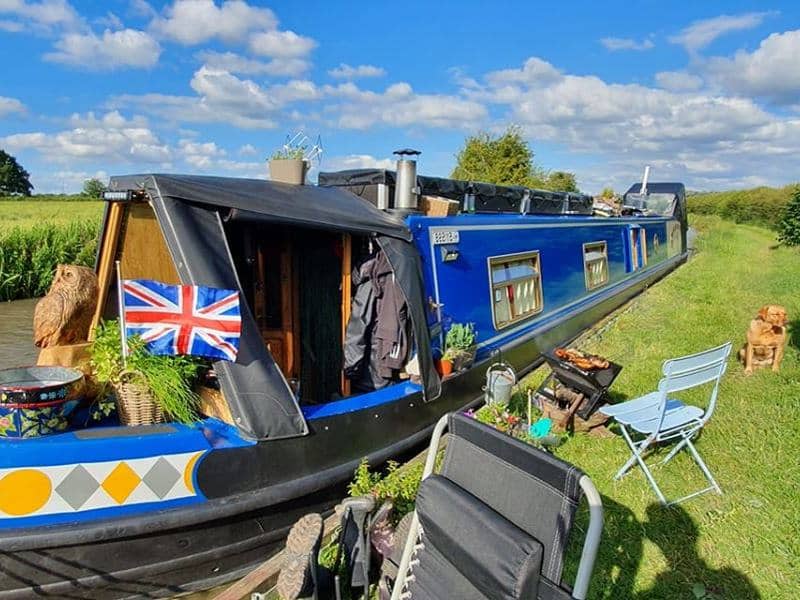
Justin Tyers • 26 June 2026
Narrow boaters upgrade to lithium
After eight years living aboard their narrow boat Welsh Wizard, Dave and Paula Hill reflect on their experience of off-grid power – Lead acid, and Lithium – as they slowly explore Britain’s 4000km of inland waterways. Dave says: As a retired mechanic and former garage owner, I’ve spent most of my working life being sceptical of grand claims about new technology. I’ve seen plenty of products promise the earth and fail to deliver, so when my wife and I moved aboard our narrowboat, we didn’t jump straight into lithium batteries. Instead, we deliberately spent our first year living with a brand-new lead-acid battery bank. Some people thought it was an odd decision, but we wanted to learn. We wanted to understand how much electricity we actually used, develop good habits, and experience the realities of off-grid living before investing in something more advanced. Looking back, it was one of the best decisions we made. Learning the hard way Typical loads include: Washing machine operation, including 60°C cycles Inverter-powered domestic appliances Refrigeration General liveaboard electrical consumption Seasonal air-conditioning support Like most boaters, we soon became aware of every amp-hour we used. Should we put the washing machine on? Should we watch another film tonight? Do we need to run the engine before bed? Lead-acid batteries are excellent teachers because they force you to pay attention. They taught us where our electricity went, how much difference a sunny day made, and how often battery levels influenced our everyday decisions. More importantly, looking back, they have provided a reference against which to compare our new life with Lithium. Discovering lithium During that first year I spent a lot of time researching battery technology and listening to other boaters’ experiences. Jonathan Cecil’s Journey With Jono YouTube channel was one of the things that encouraged me to look more seriously at LiFePO₄ batteries. The more I learned, the more convinced I became that lithium wasn’t just another expensive upgrade—it was a genuinely better way of living off-grid. Eventually we took the plunge. Our system consists of four 100Ah Victron LiFePO₄ batteries, a MultiPlus 3000 inverter charger, around 660W of solar from two Panasonic panels, and VictronConnect for remote monitoring. Over the years I’ve also integrated our tank sensors, GPS tracking, geofencing and temperature monitoring, via our Cerbo GX data communication centre turning it into far more than just a battery system. Nearly nine years later, I can honestly say it’s one of the best investments we’ve made aboard. The biggest difference is that we stopped thinking about batteries. People often expect me to talk about charging speeds or battery capacity. Those things are important, but they’re not what transformed life aboard. The biggest change was psychological. With lead-acid batteries, I’d find myself looking at the battery monitor every evening and immediately starting to do mental calculations. How much power have we used? What’s tomorrow’s weather forecast? Should I run the engine now, just in case? Nowadays, if I look at the batteries and they’re sitting at 40% state of charge, and tomorrow is forecast to be sunny, I simply go to bed. Any boater who has lived with lead-acid batteries will know exactly what I mean. That constant background worry has disappeared. The installation comprises 2 x Solar Panels offering 660wp SmartSolar MPPT 150 /50 solar charge controller 4 x Lithium Battery Smart 12.8 / 100Ah MultiPlus 12 3000 120 Smart BMS 12 200 Battery Management System Lynx Distributor 1000 DC busbar with four monitored fuses Battery Protect ensures starter battery never becomes depleted Smart Shunt 500A battery monitor Cerbo GX communication centre provides system control, digital inputs from tank senders etc.; and UI access via the GX Touch 70 screen locally and via the VictronConnect app from anywhere in the world. Letting the sun do the work Our solar array has become the real workhorse of our system. Throughout the summer we often go for extended periods without needing to run the engine or generator simply to charge the batteries. One of my favourite examples is our air-conditioning unit. On the hottest days, the solar panels are producing their maximum output—often enough to cover much of what the air conditioner is using. There’s something wonderfully satisfying about the sunshine powering the very thing that’s keeping you cool. More than an energy system Over the years, the Cerbo GX has become the information hub for the whole boat. I connected our existing tank sensors using a Victron interface, so I can see fresh water, diesel and black-water levels alongside battery and solar information, all from one screen – or even remotely using the VictronConnect app. Instead of walking around the boat checking different gauges, everything is available in one place. I also installed an Ruuvi temperature sensor on the calorifier. That may sound like a small thing, but it has proved surprisingly useful. Instead of guessing whether there is enough hot water available, I can simply check the actual temperature. This helps avoid unnecessary use of the immersion heater while ensuring there is still enough hot water for washing up and daily tasks. I installed a USB GPS receiver, which lets me monitor the boat’s location remotely, review journeys and set up a geofence around our mooring. If the boat ever moves outside that virtual boundary, I receive an email alert. Fortunately I’ve never needed it for security, but it provides real peace of mind whenever we’re away. Little things matter One of the things I’ve enjoyed most is adding sensors over the years. Paula and Dave Hill I monitor cabin temperature, fridge temperature and inside the calorifier as I mentioned earlier – I can simply check the temperature and decide whether it will need a boost. None of these features is revolutionary on its own. But together they’ve removed countless little uncertainties from everyday life aboard. Has it paid for itself? People often ask whether lithium batteries pay for themselves. The honest answer is that they probably have. Reduced engine running, lower fuel consumption, fewer servicing hours and almost no battery maintenance all add up over time. As a former mechanic, I’ve always thought using a propulsion engine purely to charge batteries was an inefficient way of doing things. Every unnecessary engine hour means more fuel, more wear, more servicing, more noise and more vibration. Over nearly nine years, avoiding many of those charging hours has undoubtedly saved money. But for me, that’s not really the point. The real benefit The real benefit is that we no longer organise our lives around battery charging. We use electricity much as people do in a conventional home. The washing machine—including 60°C washes—runs through the inverter without drama. The batteries quietly get on with their job while we get on with enjoying life afloat. Looking back, what started as a battery upgrade has become a complete onboard management system, bringing together energy, monitoring and information in one place. And after nearly nine years, the greatest compliment I can use to describe our relationship with the power system is that I rarely even think about it …and as any mechanic will tell you, that’s the hallmark of good engineering.
Justin Tyers • 13 July 2026
Chicken farmer in Turkey gets Goose bumps
After years of disappointment a chicken farmer in Turkey is thrilled with the remodelling of his solar power system. What began as a small chicken rearing operation 55 years ago in Arnavutköy, Türkiye has grown into a large farm business housing 110,000 chickens and 100,000 chicks at any one time. It also produces around 3,200 eggs a day. To maintain the health of the livestock, reliable electricity is vital for the farm’s temperature and ventilation control. Reliable electricity, however, is seldom found in rural locations. Business success brings increased power demand – so alternative power sources simply had to be found. Some years ago the farm installed a substantial 412 panel solar array which was connected to budget-priced AC inverters, but the investment didn’t yield the hoped-for solutions. Large array with long term problems The total photovoltaic capacity of 224.5kW was connected to five 50 kW on-grid inverters configured for net-zero power export. The solar installation suffered from persistent faults – especially during wet weather when the inverters would regularly shut down as a result of grounding faults caused by damaged cables, poor connections, and inadequate protection for the power installation. It was by chance that the disillusioned farm owner heard of a three-phase solar power installation nearby – running perfectly and exceeding expectations. After visiting and viewing the professional workmanship and meticulous approach of that installation, he asked his neighbour who the installer was. As a result Victron installer Erman Energy visited the farm installation and found a number of faults with the workmanship and with the devices. In addition to damaged cable insulation, the cable runs were unnecessarily long, and an energy meter – installed in the wrong location – meant that only half the potential power was being delivered. The owner agreed to diverting 98 kW of the PV system to a Victron-based system. The solution they proposed was not at first accepted – partly because of disenchantment with the solar energy concept, but also because it required investment in more reliable – and much more capable – power switching devices which would allow reconfiguration to an Energy Storage System. That way the very significant energy which could be generated, could also be stored for overnight use. Further enhancements would also become possible. Erman Energy reset the original configuration faults, rewired the faulty cabling – shortening runs wherever possible, which allowed the original rooftop solar array to reach its full potential. Construction work was carried out for a properly ventilated technical room. PV module strings were connected to Fronius inverters …along with Solar MD batteries. The system now operates flawlessly and has reduced electricity costs by half. The farm installation now operates from two supplies: the enhanced grid-connected solar installation; and the 90kVA Victron Energy ESS system. The technical room – where the batteries are housed – has been designed to allow future expansion to 180kVA and further storage as the business grows. Node-RED programming The ESS stores surplus solar production during the day and uses it later to support daytime loads and continue supplying the farm after sunset. Through custom Node-RED programming, surplus energy produced by the on-grid inverters is directed into the battery bank – allowing even more of the site’s solar generation to be used by the farm itself. For the owner, the most exciting change has simply been the reliability of his new power system. The intermittent shutdowns which plagued the previous installation have absolutely disappeared, and he’s delighted that the Victron installation maximises the power harvest from the original installation, using it to significantly reduce dependence on ‘paid-for’ grid electricity. With typical loads of 130kW, the savings are huge. Battery storage of energy which cannot be exported is clearly a worthwhile investment. The new installation provides low electricity costs and the system that can be expanded at any time without needing to be redesigned from scratch. System overview The installation combines both AC-coupled and DC-coupled solar generation within a Victron Energy ESS. The system is both AC- and DC-coupled and operates as an ESS and includes: 6 × Quattro 48/15000 Inverter/Chargers 160kWh SolarMD lithium battery storage 1 × SmartSolar MPPT RS 450/200 solar charge controller Cerbo GX communication centre GX Touch 70 local touch screen UI display 2 × Fronius Verto 30.0 inverters Standing with sales manager Bülent, in blue left to right are: Erman Tanyoldas – owner of Erman Enerji, Enes Dik – technician, and Hasan Tendik – project manager. Victron sales manager for the Middle East and Caspian Resat Bülent Aydin says : Systems like these may initially appear expensive to customers. However, with the right engineering approach and empathetic listening to the customer’s perspective, it’s evident that these investments deliver high returns in the long run. We can see from this example that systems built with low-quality solutions typically operate at around 50% efficiency and lead to ongoing maintenance costs. Short term savings become long term costs.
Justin Tyers • 22 July 2026
Mobile workshop untethers saddle maker
In spite of starting at 4:30 am every day, renowned saddle maker Cary Schwarz has, until now, found it hard to take a break. Order books are full for a couple of years ahead and the work just keeps coming. He and his wife live in the mountains in Salmon, Idaho, U.S., and for years they’ve struggled to make time for an off-grid cabin they own, three hours drive away, or to visit family and friends. My wife and I had been discussing spending more time at this ranch property that she grew up on, and so I told her, well, honey, we got a few bills to pay, so we need to figure out how I’m going to keep some workflow. That all changed when they came up with a really practical solution that provided two solutions in one. They fitted out an ex toy-hauler as a mobile workshop and provided it with enough go-anywhere solar energy to power the lights, run his craft machinery … and use it as a plug in power plant for their mountain cabin. Cary Schwarz has been a custom western saddle maker for almost 45 years. He’s also a founding member of the Traditional Cowboy Arts Association and uses an online learning platform from his website to share what he’s learned with the next generation of bespoke saddle makers. Hands-on, making beautiful things that are also functional – crafts that are critical, Cary says, to our future as a human race and living an embodied life. ‘ We mustn’t lose sight of that.’ Ninety nine percent of what I do is custom made and so I’ve got a very, very long list of commissions – many years, frankly. A customer came to me with a historical saddle in mind – one that was ridden by the legendary horseman Tom Dorrance, whose saddle was left to a family in California and pictures of it have circulated online …and so this customer said he just had to have something like that – but turned me loose when it came to some of the artistry on it. It has a fairly bold floral design and so we went with big flowers that are four inches across in places, which has been awesome. I’ve really enjoyed that process. His wife’s family’s ranch home is a ‘dry’ cabin – no water, no electricity – but they always wanted to get power into it to install a little refrigerator and have lights. So one thing kind of led to another, and I’ve got a mobile saddle shop with a power outlet so the cabin can just plug in to my mobile power system. And now the whole idea is we can maybe head south for a couple of months in the wintertime. I can see the possibility of having an order from someone on a ranch in Montana, Wyoming or Nevada or California, and loading up the workshop – going to that ranch and building their saddle parked in ‘the orchard over yonder’. They get to check in on progress – which is a big part of what I do with my customers now. How many people – even accomplished horsemen – have seen a saddle made? The power system was designed and built by Jason Pilkerton and the team at Rocky Mountain Electric & Data . Cary’s system includes: MultiPlus II Inverter/Charger SmartSolar MPPT 150/35 solar charge controller Ekrano GX data communication device provides system harmonisation and a touch screen UI allows Cary to check up on his power status. Lynx Distributor 1000 Orion XS 12/12 – 50 to allow Carry to charge the system’s batteries from his truck alternator while driving. 100W solar panel 2 x Pylontech RT 12V batteries which share temperature and voltage data with the rest of the Victron system Jason’s Victron Energy distributor is Intelligent Controls where Aaron Hanson and the team have really enjoyed being a part of Cary’s build. Aaron says: No saddle is the same, and neither is every power system. In a world of all-in-ones where everything feels ‘vanilla’—made for everyone and therefore no one—it’s fun to design a power system for someone like Cary that perfectly fits the need and is something he can ride a long, long way. Rather than always looking to cut corners or trying to fit into a mold, we love that Victron cares a lot about backwards compatibility and making serviceable components. People always want to use more power down the line, and with Victron, there’s no throwing things away the second there’s a problem, or you decide you’d like to add capacity or add a new charging source. Cary’s mobile power system runs large LED light panels and a leather stitching machine in the workshop and has been configured to connect to a generator. It also supplies power to their off-grid ranch cabin, allowing them to power lights and a small refrigerator. This gave us a tremendous amount of mobility and versatility in our lifestyle, not only in the shop, but living out there at the ranch. It’s got a little pigtail on the outside of the building and you just plug in, so you’ve got lights and a little refrigerator in there and stuff. And we’ve also got a generator for backup that can be loaded into the trailer so on a cloudy day when we might need a little extra boost, then we fire up the generator and it charges the batteries. And the truck alternator as you’re going down the road – it’s charging the batteries, too. The workshop is bathed in light for my 65-year-old eyes to be able to do some tedious work. Jason says, you can throw another battery onto the set up, and another panel if you need to. So we could increase capacity by half again by adding another battery …and frankly, that’s probably what we’ll do. It’s so fascinating because you go onto the power screen and realize, wow, there’s a lot of data on here that’s really not only interesting, but it’s useful. And on a partially cloudy day, what is it you’re doing? What is this system doing for us? And going into the evening, how much battery do I need in order to get the Starlink and the little refrigerator through the night? I’ve come to realize that even on a cloudy day, it will generate a surprising amount of power. I just thought if the sun wasn’t visible, we’re done …so that was a pleasant surprise for me. Getting back to that whole thing, if you want a professional job on an important project, you hire a professional like Jason – all I learned in high school electronics class was how to electrocute my friend. Very happy with the decision to go with solar. Now that he’s experienced the freedom of his new workstation, Cary is interested in taking his workshop to a job site (like a customer’s ranch property) or to drive south with his wife and catch a break from Idaho’s long winter months. This year, when Cary’s daughter, who lives in Southern Idaho, had a baby, Cary and his wife drove the mobile saddle shop down to her property for 5 weeks, so his wife was able to help out with the baby while Cary finished work on a saddle. You can meet the man and take a look around his mobile workshop here: Forty five years in and Cary is still fascinated by his craft …and finding new places to do it.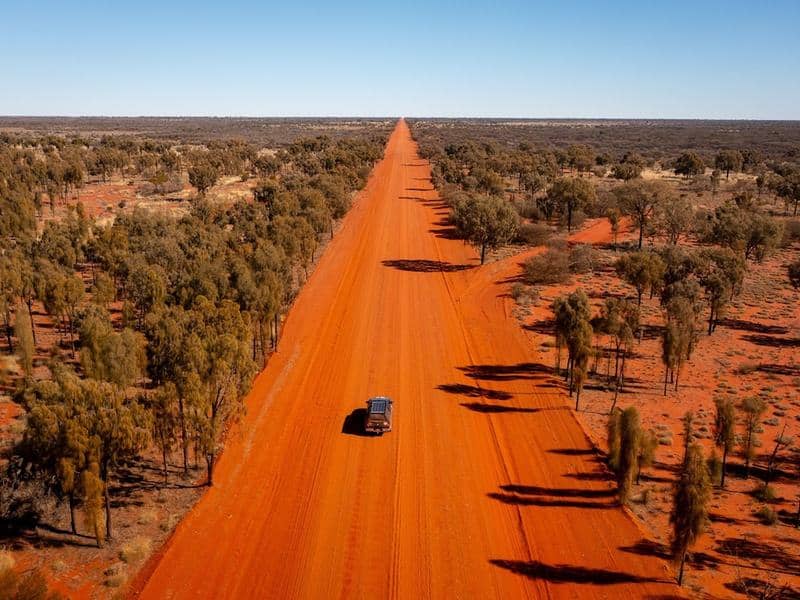
Justin Tyers • 07 August 2026
Choosing the long road
At 15,000km the Big Lap of Australia is the ultimate road trip. It’s a route the Australian adventurer Spida has driven several times. Having fallen in love with road adventure, Spida is ready to take on the world – an expedition which is driven by his love of remote places, long-distance driving, and chance meetings with people along the way. We love driving, meeting new people and experiencing different cultures – especially in the remote parts of a country. I love the preparation, the learning, the challenges it brings; and I love the excitement of the unknown. He says. He and his camera operator have set themselves the challenge of a four-year overland journey which takes in Australia, New Zealand; North and then South America …and after that the historic Silk Road between Europe and China. After completing a tour of the Antipodes, the vehicle – a Mercedes-Benz 2018 X250D fitted with a Wildtop Canopy and Faulkin all-terrain tyres – will be taken by ship to Alaska to begin the famous Pan-American Highway, travelling south through the Americas to Argentina. The final stage of his planned adventure will follow the Silk Road, a 4,000 mile land and sea route which connects Europe with China, and which was established over two thousand years ago. For a journey that will take them far from campsites and mains electricity, exciting modifications to his truck were necessary. Under the canopy a self-contained Victron Energy power system has been installed. Spida shares his journey on social media – to support which, the power system has been designed for everyday living plus his content creation and upload using a Starlink internet connection during his four years on the road. Their overnight Accommodation will vary from sleeping in a swag under the stars, to campsites, cabins, tents or roadside roadhouses – depending on where the journey takes them. The electrical installation was carried out by Red Dog Campers – who are based on Australia’s Gold Coast – using Victron Energy equipment supplied by Outback Marine Australia who also designed the system. At the heart of the installation is a 400Ah lithium battery bank offering 5.1kWh of stored energy. There’s a MultiPlus-II 3000VA inverter/charger which provides 240V AC power. The truck has a 365W rooftop solar array and SmartSolar MPPT 100/30 solar charge controller to harvest solar energy. The dual battery system powers a portable fridge/freezer together with both 12V DC and 240V AC appliances, allowing the team to work and live comfortably however remotely they’re camping …documenting their journey, providing charging for cameras, drones, laptops, tablets and mobile phone and of course the Starlink Mini satellite internet terminal. Solar energy is not the only source of power to recharge the installation’s batteries – there’s an Orion XS 1400 DC-DC charger which safely maximises charge current from the vehicle alternator whilst on the road. Grid power, too, can also be used whenever it’s available. Having multiple charging sources allows the vehicle to remain largely self-sufficient for extended periods, whatever the weather. The battery management system for the Lithium NG Batteries is provided by a Lynx Smart BMS NG 500 – it optimises charge current, monitors cell voltage and temperature and protects the bank with an automatic shutdowns if conditions ever go out of the batteries operational range. Spida can see what what his system is doing at any time by using his GX Touch 50 – a display which provides finger-tip monitoring of the battery state of charge and live system operation, together with programming adjustments, firmware updates and to analyse historical use. At the heart of the system is a Cerbo GX MK2 data communications centre which allows devices to talk to each other. Integrated protection and isolation switches ensure that the electrical system will be reliable during years of continuous travel. Across four continents with differing climates, remote tracks and long distances the ability to generate, store and manage their own electrical power wherever the vehicle happens to be ensures the team can be confident if they choose to remain longer in isolated locations which have caught their imagination. They can produce their content and remain in touch with family and followers around the world. The installation comprises 400Ah Lithium NG battery bank (approximately 5.12kWh usable capacity) MultiPlus-II 3000VA inverter/charger 365W rooftop solar array SmartSolar MPPT 100/30 solar charge controller Orion XS 1400 DC-DC charger Lynx Smart BMS NG 500A Cerbo GX MK2 communication centre GX Touch 50 display 300A fused battery protection with isolation switches VE.Direct communications network Three dual USB charging outlets Dedicated DC supply for Starlink Mini satellite internet For Spida, all this technology supports a bigger ambition – to see the world! The journey to meet the people who live in hidden places, with exotic cultures, has begun. You can follow Spida’s journey on his Facebook channel as he tackles the unexpected events waiting along the way!
Justin Tyers • 17 August 2026
Exploring Turkey by Motor Home – wherever the road leads
Some motorhome owners like to travel light; others leave nothing behind. When the owner of this Dethleffs Globetrotter decided to explore more of Turkey’s 300,000 square miles of historic landscape, he was determined that his life on the road would include the comforts of home. At the time of purchase it was clear that the van’s existing electrical installation wasn’t going to be up to the job. For the new owner uninterrupted energy security was particularly important and visiting a campsite simply to get an electrical hook-up wasn’t part of the plan. With air conditioning, a washing machine, dishwasher, satellite TV and audio entertainment – plus the everyday electronics we all have – 24-hour power with plenty of reserve capacity in the morning was essential. After calculating the expected energy consumption from all the devices the installer, Tezcan Caravan – in collaboration with Eltesan Mobil who helped both design and commission the system – proposed four Lithium NG (Next Generation) 12.8V/300Ah batteries at its heart. Together the batteries store 15.4kWh of energy …a significant energy reserve for a motorhome. Sophisticated Lithium NG batteries offer a maximum charge and discharge rate of C1 – meaning they can deliver their full rated power in an hour …and be recharged as quickly. They have an integrated shunt which offers readout of voltage and temperature at cell level allowing you to see the battery status, deep down. Victron NG batteries are mandatorily managed by a proprietary BMS NG – in this case the VE.Bus BMS NG which receives data direct from the integrated shunt and manages the battery charge and recharge; and provides automatic shutdowns to avoid a crisis in extreme conditions or in the event of a failure somewhere else in the installation. A large battery bank is useful, but energy storage is only half the story – eventually that energy must be replaced. Three solar panels on the roof are connected to a SmartSolar MPPT 250/100-Tr VE.Can solar charge controller. Whenever there is daylight the batteries will be recharged – great or small, according to the abundance of sunshine. With three seaboards Turkey bridges from Southeastern Europe to Western Asia. Between Turkey’s extremities lies an extraordinary and varied landscape. Inland the Anatolian Plateau becomes increasingly rugged toward the east. The Pontic Mountains rise in the north and the Taurus Mountains in the south. Eastern Anatolia reaches still higher, culminating at 5,137 metres on Mount Ararat, while Lake Van forms the country’s largest lake. That sort of geography explains why the motorhome has been fitted with BF Goodrich all terrain tyres. Between destinations, whilst the engine is running, an Orion XS 12/12-50A DC-DC battery charger takes energy from the vehicle’s alternator to recharge the house and starter battery banks. A Fischer Panda 12000x generator has been integrated to provide an independent source of AC power when required. It has its own 12V/60Ah AGM Super Cycle battery, keeping its operation independent of the main domestic battery bank to provide an absolute guarantee of redundancy. The owner doesn’t even have to check whether it’s time to start the generator as that decision, too, is taken automatically by an Ekrano GX communication centre. The Ekrano provides data communication between all devices – allowing them to speak to each other – and allows the user to monitor status, change parameter settings, analyse history and update firmware. The generator’s auto-start/stop parameters have been configured using the Ekrano GX. Auto-start can be triggered when the batteries cross a state-of-charge threshold; by low voltage; or by high demand – according to the owner’s choices. Automatic generator starting adds another layer of resilience, and allows a high degree of user-customization. A Quattro 12/5000/220-100/100 Inverter/Charger provides AC power to the appliances and can also accept AC grid, or generator power via its two AC inputs – switching automatically to the live source – in order to recharge the batteries, run appliances from an external source, or even add battery inverted AC power to the external AC source to supplement grid power when running heavy loads. This unique feature provides access to power resources well beyond the expectation of the user. It saves money, too, as it obviates the need to buy, install and carry a higher output inverter for situations which only arise occasionally. How does the Quattro know when the on board current-draw exceeds that which is available from the AC power source? Well, his system includes a Digital Multi Control panel which allows him to dial-in the maximum current which can be drawn from the caravan site infrastructure ..and also for his generator. Not so incidentally, this saves stepping out into the rain to reset the fuse which would otherwise be tripped by exceeding the local current restriction. The Quattro also has two AC outlets – hence its name – the second of which will automatically shut down when there is no external AC source. This feature allows the second outlet to be connected to any non-essential devices which consume a large amount of energy – the air conditioning, for example. In the event of grid failure or unexpected generator shutdown, protection is provided for the onboard batteries instead of draining them quickly and unnecessarily. The result of this sophistication provides an experience which offers more energy security than that of most grid-connected houses. There is even a Blue Smart IP22 Charger 12/20 connected via the Quattro’s AC2 output to maintain the vehicle’s starter battery. So there won’t be any surprises whenever he goes to start the engine. Even when the owner is away from the vehicle he can keep an eye on the power system at any time through the internet based Victron Remote Management ( VRM) portal. VRM is an extension of the VictronConnect app which allows monitoring, programming and digital switching of connected devices whether you’re nearby, or the other side of the world. The system comprises: 4 × Lithium NG Battery 12.8V/300Ah 1 × VE.Bus BMS NG 1 × Quattro 12/5000/220-100/100 1 × SmartShunt 2000A 1 × Lynx Power In 1 × Orion XS 12/12-50A DC-DC battery charger 1 × SmartSolar MPPT 250/100-Tr VE.Can 1 × Blue Smart IP22 Charger 12/20 1 × Ekrano GX 1 × Fischer Panda 12000x generator 1 x Digital Multi Control 1 × 12V/60Ah AGM Super Cycle Battery Eftal Tezcan of Tezcan Caravan says: “This system provides sufficient energy capacity to meet the customer’s 24/7 power requirements while being designed with maximum reliability in mind. By considering the highest possible demands for both charging and power delivery, we have created a robust and trouble-free solution – whether the vehicle is being used professionally or creating enjoyable moments for family and friends”. Photo credit : The headline image of Bodrum Castle is the work of Serhio Magpie Photo credit : The image of the ruins of the Temple of Athena in Assos is the work of Herr Bert Weber and was uploaded to Wikimedia Commons by W.W.Thaler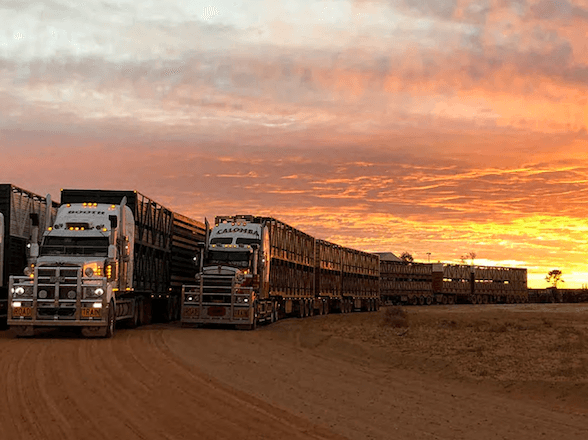
Justin Tyers • 26 August 2026
Up the Creek? Not now.
I know, I know – it’s a question you’ve been asking yourself for years: How big is the world’s largest cattle station? Well, it occupies an area of almost 16,000km which, to put it in perspective, is larger than some countries. It’s located in South Australia; and it’s called Anna Creek. Victron installer MyEnergy Engineering recently won the Master Electricians Australia Project of the Year award – for installations over $1M AUS – for their solar based power installations at the Williams Cattle Company’s seven stations, including Anna Creek. The scale of the task, together with the logistics required to keep it all to schedule are baffling. Far beyond the reach of the electricity grid, for decades Anna station has relied on diesel generation for its power. Running a generator hundreds of kilometres away from towns and cities brings headaches of its own …getting fuel supplies, sourcing engine parts for maintenance and servicing – or calling out an engineer if something’s actually gone wrong. Even when the generator goes down with a problem you can solve yourself, there’ll be no power until you’ve put it back together again. Quite apart from that, running a generator as your sole source of power is the most expensive way to produce electricity. The station uses electricity to run agricultural plant, and for the comfort of the farm hands. There’s air conditioning, refrigeration, kitchen equipment and radio communications, together with the station infrastructure of pumps and cutting rooms. Seven cattle stations in the region are owned by Mathew Williams whose family bought their first station in 1967 – acquiring Anna Creek ten years ago. Today all the William’s stations benefit from solar power. Each station has a manager and up to eight hands including a cook . Together they are responsible for rearing approximately 17,000 cattle - Poll Hereford, Angus and Angus-cross. Overseeing the calving and seasonal fattening operations is work they carry out to the highest standards – and for which the station has a number of Organic and husbandry accreditations including: Southern Cross Certified: National Standard for Organic and Biodynamic Produce (DAFF/IOAS) National Organic Program which use the USDA benchmark. Never Ever Beef Program: Through Greenham and Humane Farm Animal Care. Farming where the annual rainfall averages 140mm and summer temperatures can be extreme presents challenges on a daily basis – but one thing they don’t have to worry about these days is electricity. The new solar power installation comprises 70kWp of solar panels. Three Fronius Symo 20kW AC-coupled solar inverter harvests part of the solar energy produced in order to power AC loads directly during the day. A SmartSolar MPPT RS 450/200 solar charge controller sends solar energy to the Pylontech US3000 lithium battery bank which has a capacity of over 150kWh available for use day or night. Six Quattro 48/10000 inverter/chargers configured for three phase provide AC power from the battery bank. The Quattros, running as battery chargers, will also redirect surplus current from the Fronius AC inverters toward the batteries, and are able to control the charge current from the Fronius devices through frequency shifting. A Cerbo GX communication centre provides data communication between all attached devices maximising harvest, controlling power sources and triggering, for example, and automatic start up for the site’s generator which has been retained as emergency backup. An autostart will be triggered whenever a predetermined threshold has been reached – such as low battery state of charge, or voltage; or to meet high levels of power demand. The Cerbo GX also provides local monitoring and control via the touch screen user interface – the GX Touch 70 and also allows the system to be monitored and controlled by MyEnergy Engineering at the touch of a button – in spite of the fact that their office is a ten-hour drive away – via the free-to-use platform Victron Remote Management ( VRM ) VRM is available to all Victron users and is available direct from a smart phone using the VictronConnect app. Lynx Distributors – modular DC busbars with monitored fuses and LED status display – help to keep the installation really tidy. Lead electricians Sam Addis and Nick Battista Ciaram Granger, Managing Director of MyEnergy Engineering says that the greatest challenge was the station’s remote location: “ Everything had to be carefully planned because additional materials, equipment or support could not simply be collected nearby. The system has to cope with high temperatures, dust and the changing loads of an operating cattle station, and we are proud to have delivered, reliable, around-the-clock power at one of Australia’s most iconic and remote pastoral properties. “In an area where the main operational challenges are remoteness – limiting access to services; low and unreliable rainfall, drought, heat and dust; in the event of electrical anomaly remote monitoring and intervention becomes particularly important .” Anna Creek was one of seven remote area power systems MyEnergy delivered for the Williams Cattle Company at a cost of more than AUS$1.5 million. The sun now guarantees twenty four hour uninterrupted power, silently, and a reduction to virtually zero maintenance. Anna Creek and other station images used in this article have been reproduced from the Williams Cattle Company website.
Justin Tyers • 04 September 2026
Top of Coom gets to the bottom of power problems
Just as the finishing touches were being made to a backup power installation at the famous Irish pub known as Top of Coom , a lightening strike on the other side of the valley caused a power outage on the electricity grid. The lights went out and the kitchen came to a standstill. Slightly sooner than the installers had been expecting, their new power installation was urgently needed. A flick of the switch and it became operational – probably the fastest proof-of-need for a back-up power system! Top of Coom is Ireland’s highest pub and restaurant at over 1000ft above sea level. It’s been home to six generations of the same family – the Creedons – since the 1800’s. Their hospitality attracts visitors from all over the world and musicians from the local community. Flute and fiddle music drifts down the Glanlee valley several nights a week, and in the summer they host the National Sheep Shearing competition; and local Sheepdog trials. At times like those the pub is crammed with visitors and the kitchen is flat-out in to meet high demand. A power cut at times like those are disastrous for the operation, and damaging for the reputation of the business. To remedy the recurrent power outages, servicing electrician, Shane Casey ( SCES ), suggested they install battery stored energy in preference to rushing out to start the generator every time there was blackout. Victron installer EnergyFreedom Systems designed a fully automated system which chooses between four power sources – solar energy, battery storage, cheap rate electricity from the grid and – fail all else – generator backup which can be started automatically. With some PV panels and AC inverters already in place, the existing infrastructure has been integrated alongside the new. By day, AC inverters provide power directly from the solar panels. By night, two Quattro 15kVA inverter chargers provide AC power from the 64kWh PowerLab lithium batteries. The Quattro inverter/chargers have two AC inputs which can recharge the batteries – when required – from the grid or from the generator, automatically switching to the live source. EnergyFreedom Systems are able to monitor the remote site and make changes to the program using Victron Remote Management ( VRM ) – which saves driving into the mountains if ever there’s a problem. VRM provides push notifications whenever pre-programmed thresholds have been reached, so EnergyFreedom will know of any developing situation before staff and customers are even aware of it. As a result, the business keeps running regardless of what is happening on the local energy grid. The power supply is also used on the family’s own sheep farming operation and at their home. Not only does the installation bring energy security, but their businesses benefit from reduced energy costs – notably as a result of recharging the batteries overnight, if needed, using economy-rate electricity grid prices. Stored energy can then be used the following day during peak hours. The main focus of the system, however, is on maximising self-consumption of solar energy. An expansion of the PV array which is planned in future will improve those economics further. The new installation is built around: 2 × Quattro 15kVA inverter/chargers. A Cerbo GX communication centre device ensures all Victron and third party products talk to each other. 4 × PowerLab 16kWh LiFePO₄ batteries – 64kWh total storage. Existing solar PV, adopted and AC-coupled on the backed-up AC output. New standby generator fully integrated with the system. Victron Remote Management allows instant engineering support if needed. The Cerbo GX has a programmable feature known as Dynamic Energy Storage System (Dynamic ESS) which provides intelligent automated switching between power sources and cheap-rate battery charging from the grid. Dynamic ESS knows the system’s storage and output capacities; it knows what the energy price is for the next hour; it knows what tomorrow’s weather will be, and it knows the cost and lifespan of the battery installation. It even learns which are the busiest days of the week. Using all that data it makes real time decisions so that it’s always providing the lowest cost energy. Energyfreedom Systems designed and programmed the system, with the installation being completed jointly with Shaun Casey of SCES. It was whilst Energyfreedom was completing the configuration and programming stage that the unexpected grid failure provided the perfect opportunity to demonstrate need and reliability! The system secures not only the pub and restaurant power, but also the associated sheep-farm and owner accommodation – creating one power source for the entire site. It also ensures that popular annual events such as the national sheep shearing competition can take place without the danger of power failure. Short power interruptions will be handled by the battery/inverter system, with switch over times so short you don’t notice a blink. For longer outages or during periods of very high energy demand, the generator will be auto started to meet the peak loads. All switching is intelligently controlled by the Cerbo GX which has been programmed to choose the energy sources. The Creedon’s, in their remote hospitality business, no longer fear a power cut occurring just at the worst time …they never even have to think about it. Let’s meet the locals: Twelve years ago the pub reopened after a devastating fire. For two years the locals missed the craic – gossip and entertainment – and were interviewed by the Irish Examiner. Here they describe their pleasure at the pub’s reopening though anyone living more than a few miles away struggled to understand the local accent – a factor which helped the video go viral:
Justin Tyers • 15 September 2026
In the wake of the first explorers…
Circumnavigator Alec Hughes is on a mission to re-connect us with our seafaring past. Speaking at schools and yacht clubs as he sails around the world, he teaches the young and old, alike, about the earliest days of exploration and trading under sail. On the foredeck of his 51ft sloop Manu , he carries a balsa wood raft – a replica of the craft in which navigators would have crossed oceans thousands of years before him …sailing by the stars, the direction of ocean swell, the behaviour of clouds, and by observing birds in flight. The raft is a symbol of Peru’s ancient Inca maritime heritage, and the cultural debt we all owe to early maritime communities who explored the world, their incredible feats of navigation and seamanship, and his message is that it is still possible, today, to travel the world without damaging the planet. Alec’s vessel is equipped with the latest technology: electronic charts; weather information; a B&G autopilot with associated compass and computer control; a Starlink Mini internet router; plus all the domestic appliances – fridge/freezer, pumps, lighting, and audio entertainment – you would expect on board a blue water cruiser …together with the labour-saving luxury of an electric windlass. His aim is that all his equipment will be powered by the sun. His yacht is fitted with an engine, of course, which has an alternator – but Alec’s relationship to both is that they will only used in emergencies. In fact, during his latest circumnavigation he only started the engine twice. Alec and his crew passed East to West on their passage around Cape Horn. Manu’s electric power system was built with devices imported by Tienda Solar – Peru’s leading Photovoltaic distributor and Victron Energy’s only service partner in the region. It was installed by Alec himself in collaboration with university students helping each other learn about battery based power systems. Alec has a number of flexible solar panels offering up to 1000W. There is also a rigid panel of 500W mounted on davits at the stern, away from the shadows cast by the sails. Solar energy from all of them is harvested by two BlueSolar MPPT 75/15 solar charge controllers to be stored in two 25.6V lithium batteries with a capacity of 150Ah. When needed, power generated by the Yanmar 120A alternator can charge three battery banks at the same time – the engine starting battery, the ‘house’ bank, and a battery dedicated to operating the anchor windlass. Two Orion-Tr Smart 12/24-10A chargers protect the alternator from overload whilst maximising the charge current to house and starter batteries. A further Orion-Tr 24/24-12A isolated DC-DC converter provides power to a battery which is dedicated to the 900W anchor windlass up forward. A Cerbo GX MK2 data communication device ensures that all components of the power system are able to talk to each other allowing proper charge/discharge control. System status – together with programming and firmware updates are available via the GX Touch 50 display UI. Access to the system can also be made from a smart phone using the VictronConnect app which provides management in Bluetooth range – or from the other side of the world using its remote management feature. Alec Hughes has been sailing since he was six and is passionate about bringing the sport – which is underdeveloped along the 3000km coastline – to more Peruvians. In pursuit of that aim he founded – and is President of – the Peruvian Sailing & Ocean Society (Sociedad Peruana de Vela y el Mar). Through it he hopes to introduce and expand the sport and shore facilities along the Peruvian seaboard, through competition and social events. He has dedicated much of his life to exploring the connection between sailing, Peru’s maritime heritage, and the ocean which connects it to the world. The experience he has more recently gained in solar energy is allowing him to help other yachtsmen install reliable, sustainable, PV based energy systems on board their boats – increasing safety at sea, and providing them with the confidence to spend more time on the water. At the same time Tienda Solar is investing time and money into extending their online and physical presence – making it easier for Peruvians to find information and devices together with providing the service network which makes reliable solar, battery-based power systems an easy choice – available to everyone in the region. It is a testament to his character, skill and sense of maritime community that when – a few days into his last circumnavigation which began in April 2025 – he rerouted to go to the assistance of British rowers Miriam Payne and Jess Rowe who had broken the rudder of their rowing boat 350 miles into their planned 8,000 mile voyage after being hit by a wave. The navy were willing to rescue the rowers …but not their boat. It was agreed that Alec would rescue rowers-and-boat – a feat which took eight days. Back at Lima the boat was repaired and the pair later successfully completed their record breaking endeavour. You can follow Alec via his Facebook channel. Let’s meet the man: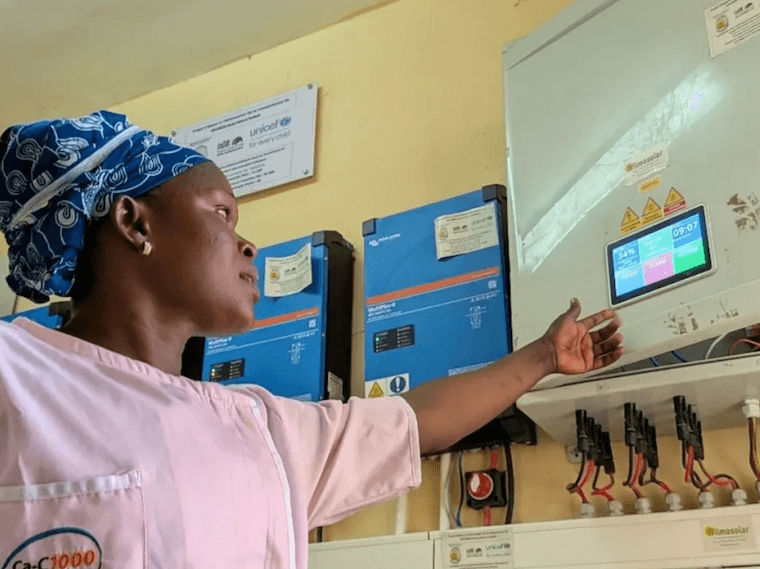
Justin Tyers • 02 October 2026
Twenty-four hour maternity power
Four health facilities in the Northern Region of Cameroon have received new hybrid solar power systems designed to keep essential healthcare services running when the electricity grid fails. It’s not uncommon for the ENEO electricity grid to break down for a twelve-hour period. Needless to say, such outages can be disastrous for the provision of care in local hospital maternity wards – without power they cannot provide incubators, replenish oxygen, illuminate medical procedures – or wards – nor maintain the standards of clinical outcomes for the new mothers and babies who depend on them. Thanks to a UNICEF Cameroon program to invest in uninterrupted power, and the The Cameroonian solar company Solarly SARL who designed and installed the power systems which now serve health facilities at Pitoa, Ngong, Touboro and Tcholliré, that has all changed These installations form part of a wider UNICEF initiative – supported by the Islamic Development Bank (IsDB), bringing reliable energy to hospitals in northern Cameroon. New era of confidence Hospitals in the North and Far North of Cameroon experience frequent power cuts which their generators haven’t always been able to cover. With limited power and fluctuating voltage they’re not capable of meeting spikes in demand or providing the clean power required to keep medical equipment online. New solar-powered back-up energy is changing all that. With between 7 and 17 kWp rooftop PV solar arrays at each location. The solar harvest is regulated by SmartSolar MPPT solar charge controllers to maximise energy storage into ZYC Simpo 5000 48V Lithium battery bank. The systems are programmed via a Cerbo GX which provides data communication between Victron Energy and third-party components – allowing for seamless whole-system compatibility. Most solar based energy systems have the goal of reducing grid energy costs by prioritising solar energy use – but the systems at these hospitals and clinics are programmed to ensure the batteries are maintained at 100% State of Charge – guaranteeing an uninterruptible 24hr power supply. Programming of the Cerbo GX prioritises energy storage from the PV panels to the batteries. When the batteries are full, PV energy is used to run loads. At night – or during poor weather and high demand – the system chooses grid energy as the primary energy source. When the power grid fails, the Quattro or MultiPlus-II inverter/chargers automatically take over the hospital’s energy supply – within 20 milliseconds of the grid outage. The switch is made so quickly that even sensitive medical equipment does not flicker. True sine wave power from the inverters will run the most sensitive medical equipment. Stress free – better outcomes It’s not possible to overstate the difference reliable power has made for patients and staff alike. In the past, during a power cut, staff have had to bring a motorbike onto the ward in order to use its headlight whilst assisting with child birth. The danger posed to life as a result of power outages – limited oxygen supply, loss of incubators, intensive care, refrigeration and surgical procedures – can only be imagined. Recently, an expectant mother arrived at the facility at two o clock in the morning at the same time as the electricity grid failed. The hospital’s solar power system took over the power supply and the baby was able to be cared for – as was required – in an incubator. “ It was 2 a.m. and there was no electricity in Yagoua. I don’t know what happiness would have escaped me if it wasn’t for this solar system. We mothers are reassured to know that health personnel can intervene, even when the Eneo power is cut off elsewhere. ” she said. Midwives, like Patchada, were faced with perilous births, sometimes in complete darkness. “ It was difficult ,” she said. “ Some deliveries required cesarean sections, while many newborns needed vital care, including oxygen. Exhausted and anxious mothers were immersed in a climate of fear and uncertainty .” Knowing what’s happening The Cerbo GX also provides local and remote system monitoring for the dedicated management team. The VictronConnect app provides access to all system data – live and historic – together with programmable options and firmware updates regardless of whether the system manager – or installing engineer – is on site or on the other side of the world. In practical terms at-a-glance data is made available to the four-man monitoring team – two men and two women in fact – via a GX Touch UI. The teams receive basic system-maintenance training and are provided with a toolkit – promoting on site autonomous control. They check daily performance, read any system alerts, and interview staff to make sure that the power installation is meeting their needs. Remote off-site monitoring is available straight from the VictronConnect app allowing system performance to be interrogated by Solarly SERL engineers without leaving their office. Remote programming functionality means they won’t even need to send an engineer to visit the hospital site to make significant programming changes or to update firmware. Automated push-notifications will warn Solarly of any significant system event – allowing them to take remedial action to prevent a situation from impacting the smooth running of the hospital’s maternity ward. Healthcare can’t wait UNICEF this year celebrate 80 years of providing support to disadvantaged children around the world. Today they operate in 190 countries. Solarly SARL estimates that more than 10,000 patients a year will benefit from the stable electricity these four installations provide. Energy resilience changes lives. High levels of infant mortality – particularly among those needing oxygen – are being greatly reduced and the morale of the healthcare team has been much improved.Hai bisogno di consigli? I nostri rivenditori altamente preparati saranno felici di aiutarti.
Trova un rivenditore nelle vicinanze
Consulta il nostro database o contatta il tuo rivenditore per avere supporto tecnico dedicato, richieste di riparazioni o di garanzia.
Assistenza
Leggi di più sulla nostra garanzia standard di 5 anni leader del settore e sul servizio di riparazione globale.
Garanzia


©Victron Energy 2026